LLM Fine-Tuning — Full Guide
Adapt a pre-trained language model to your task, domain, or behavior without retraining from scratch. This guide maps the modern fine-tuning landscape — parameter-efficient methods (LoRA, QLoRA), supervised adaptation, and alignment (RLHF, DPO, GRPO) — with original explanations, walkthroughs, and animated visuals.
Inspired by (references, not copies): Daily Dose of Data — LLMOps Part 12 · Cloud Girl — 15 fine-tuning techniques
Format matches our OpenClaw and Hermes masterclass guides: prose and lists, terminal GIFs, diagram GIFs.
What you'll understand at the end
- When prompting and RAG are enough — and when training pays off
- The five families of adaptation (full SFT, soft prompts, PEFT, alignment, federated)
- How LoRA and QLoRA shrink trainable parameters and VRAM
- How RLHF, DPO, and GRPO shape model behavior after SFT
- Runnable patterns with HuggingFace PEFT + TRL

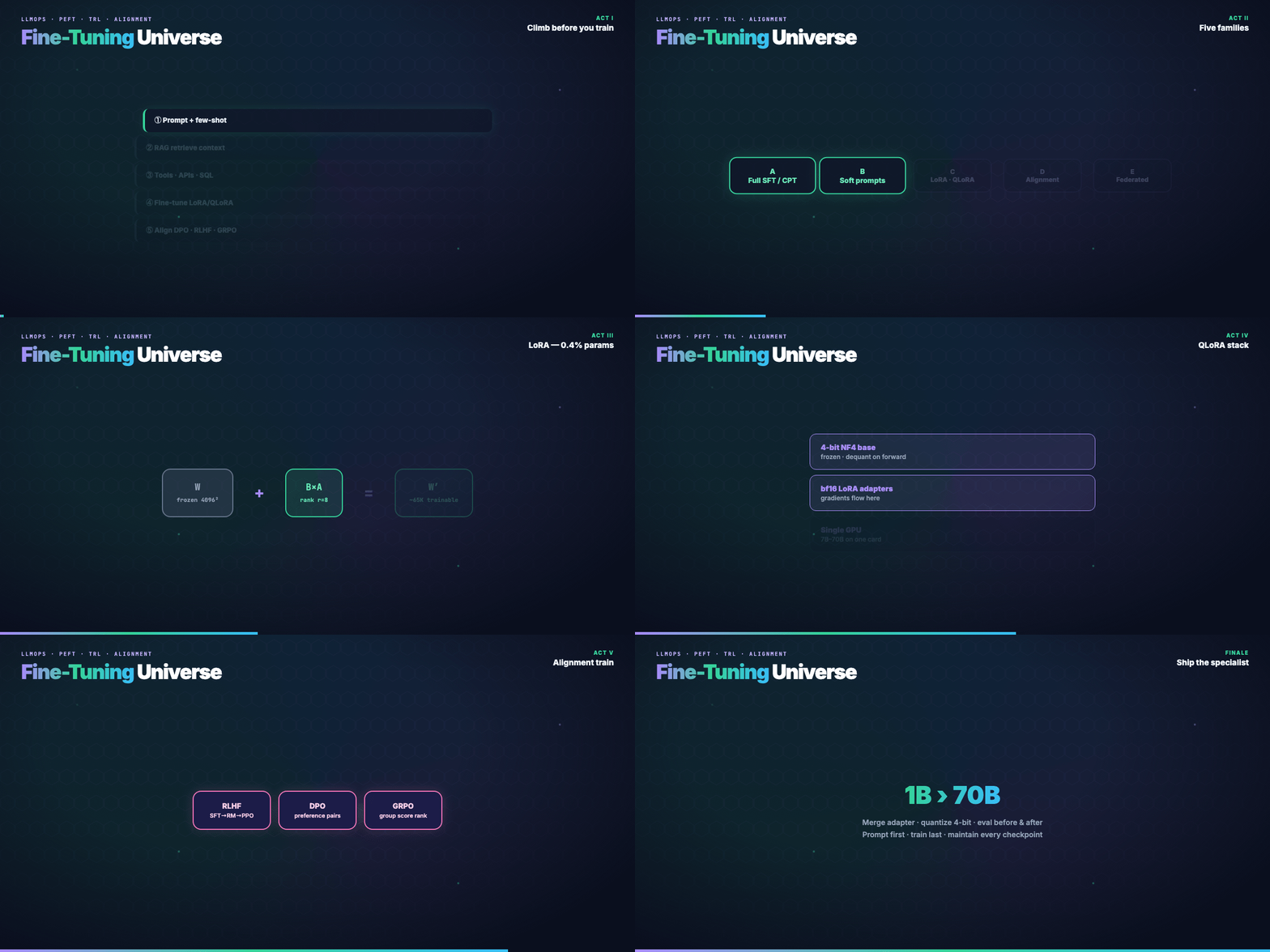
One-GIF overview (blog hero): mega-finetune-everything.gif — ladder → families → LoRA → QLoRA → alignment → deploy (~12s).
Introduction — adaptation is a ladder, not a switch
A foundation model predicts text. It was not hired for your job — it was trained to continue sequences on the internet. Fine-tuning is onboarding: show it examples of the outputs you want until the distribution shifts.
That sounds simple. In practice, “fine-tuning” spans:
- Updating all weights on domain text (continued pre-training)
- Teaching instruction-following on curated
(prompt, response)pairs (SFT) - Injecting tiny adapter matrices while freezing the base (LoRA / QLoRA)
- Optimizing preferences so answers match human judgment (DPO, RLHF)
- Training without centralizing raw data (federated fine-tuning)
Pick the wrong rung and you either burn GPU budget or ship a model that forgets general knowledge. Pick the right one and a 1B adapter can beat a 70B prompt on a narrow task.
Part 1 — The adaptation ladder
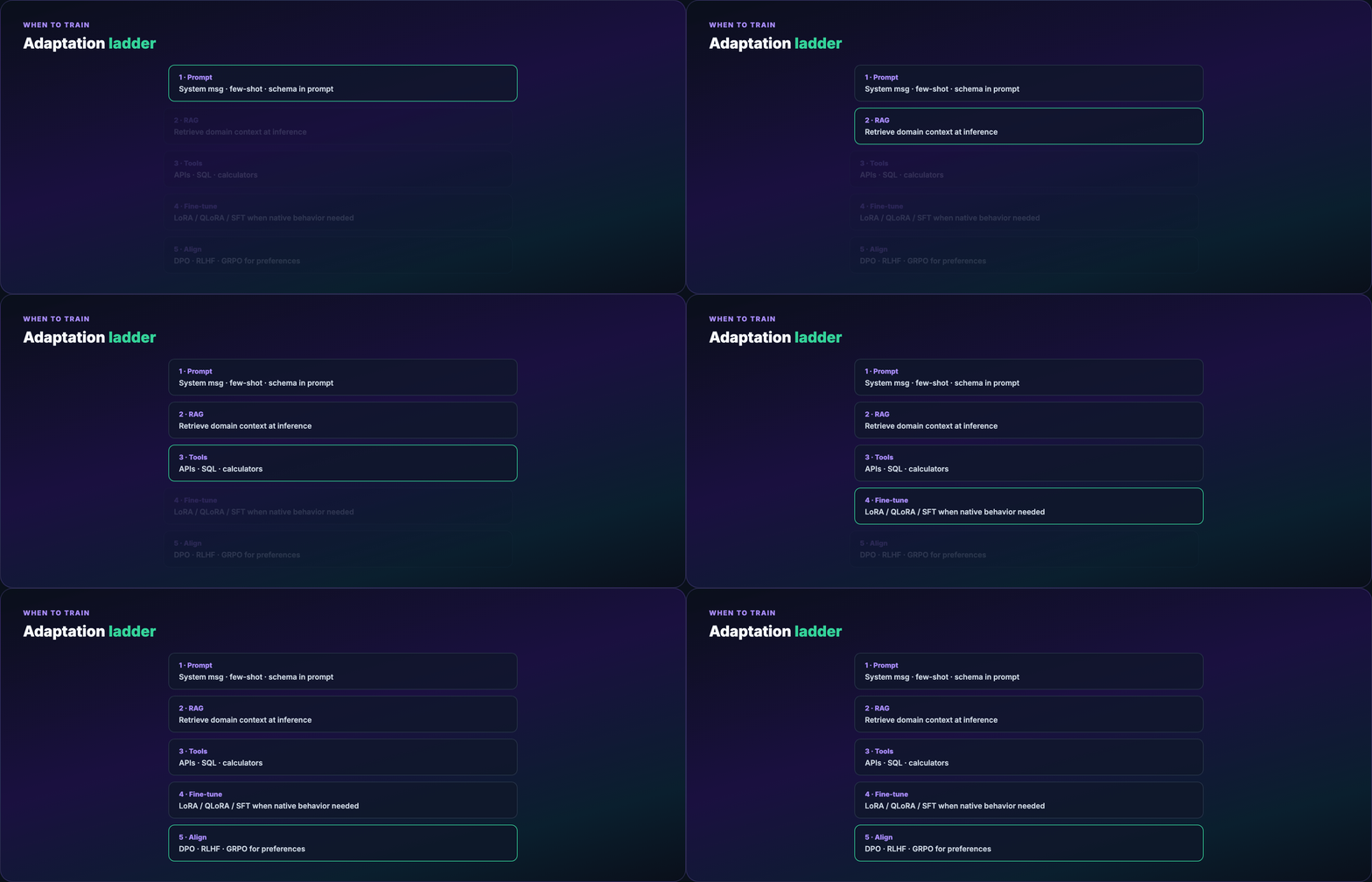
Before any training job, walk this ladder top to bottom:
- Better prompts — system message, few-shot examples, output schema in the prompt
- RAG — retrieve domain docs at inference; no weight updates
- Tool use — calculator, SQL, APIs; model orchestrates, doesn't memorize
- Fine-tune — when behavior must be native, fast, or offline
- Align — when “correct format” isn't enough; you need preferred behavior
Fine-tune when:
- You need a fixed output format (JSON, legal clause structure) without fragile prompt hacks
- Latency/cost requires a smaller specialist that beats a larger general model on your metric
- Data is proprietary and cannot leave your environment (local QLoRA)
- Prompt + RAG plateau on your eval set after serious iteration
Skip fine-tune when:
- Fresh knowledge is the bottleneck — RAG or periodic re-indexing fixes that
- You're still exploring product fit — eval harness isn't stable yet
- A new base model drops monthly and you can't afford re-training debt
Part 2 — Why fine-tune (and why not)
Reasons teams fine-tune
Domain fluency. Medical billing codes, legacy COBOL, internal ticket taxonomy — bases saw little of this during pre-training. A few thousand in-domain examples often move accuracy more than clever prompts.
Format reliability. “Return valid JSON with keys summary, risk_score” works in prompts until it doesn't. SFT bakes the schema into the prior.
Instruction following. Chat-tuned models are themselves fine-tuned products. Base checkpoints (Llama-3.2-base) need SFT before they're pleasant to talk to.
Safety and tone. Curated datasets can suppress toxic patterns or enforce brand voice — with the caveat that narrow tuning can hurt unrelated capabilities.
Efficiency. A 3B LoRA specialist on your support macros can beat GPT-4-class models on that slice at 1/100th inference cost — if your eval proves it.
Reasons to pause
Catastrophic forgetting. Heavy SFT on one task degrades others. Mitigations: LoRA (frozen base), multi-task mixes, lower learning rate, shorter training.
Data tax. Quality beats quantity. Bad labels teach bad habits faster than good labels teach good ones.
Compute and ops. Even QLoRA needs GPUs, experiment tracking, regression evals, and a plan when the base model updates.
Maintenance loop. Your fine-tune is a fork. New bases (Qwen 3, Llama 4, Gemma 4) may obsolete it — budget for re-runs.
Part 3 — The five families of fine-tuning
Think of the field as a toolbox, not one technique. Most production stacks combine families: SFT with LoRA, then DPO on preferences.

Family A — Foundational adaptation
Update many or all weights on new tokens.
- Full fine-tuning — every parameter trains; highest VRAM, highest forgetting risk
- Continued pre-training (CPT) — more raw domain text before instruction tuning
- Instruction SFT —
(instruction, response)pairs; standard path to chat models
Use when you have budget, clean data at scale, and need deep domain rewiring.
Family B — Soft prompting
Keep weights frozen; learn continuous prompt vectors prepended to activations.
- Prompt tuning — learn embeddings at input layer only
- Prefix tuning / P-tuning — virtual tokens across layers
- P-tuning v2 — deeper prefix injection
Tiny storage (kilobytes), zero merge step, but often weaker than LoRA on hard tasks. Good for multi-tenant “personalities” with strict memory caps.
Family C — Parameter-efficient fine-tuning (PEFT)
Freeze the base; train small structural patches.
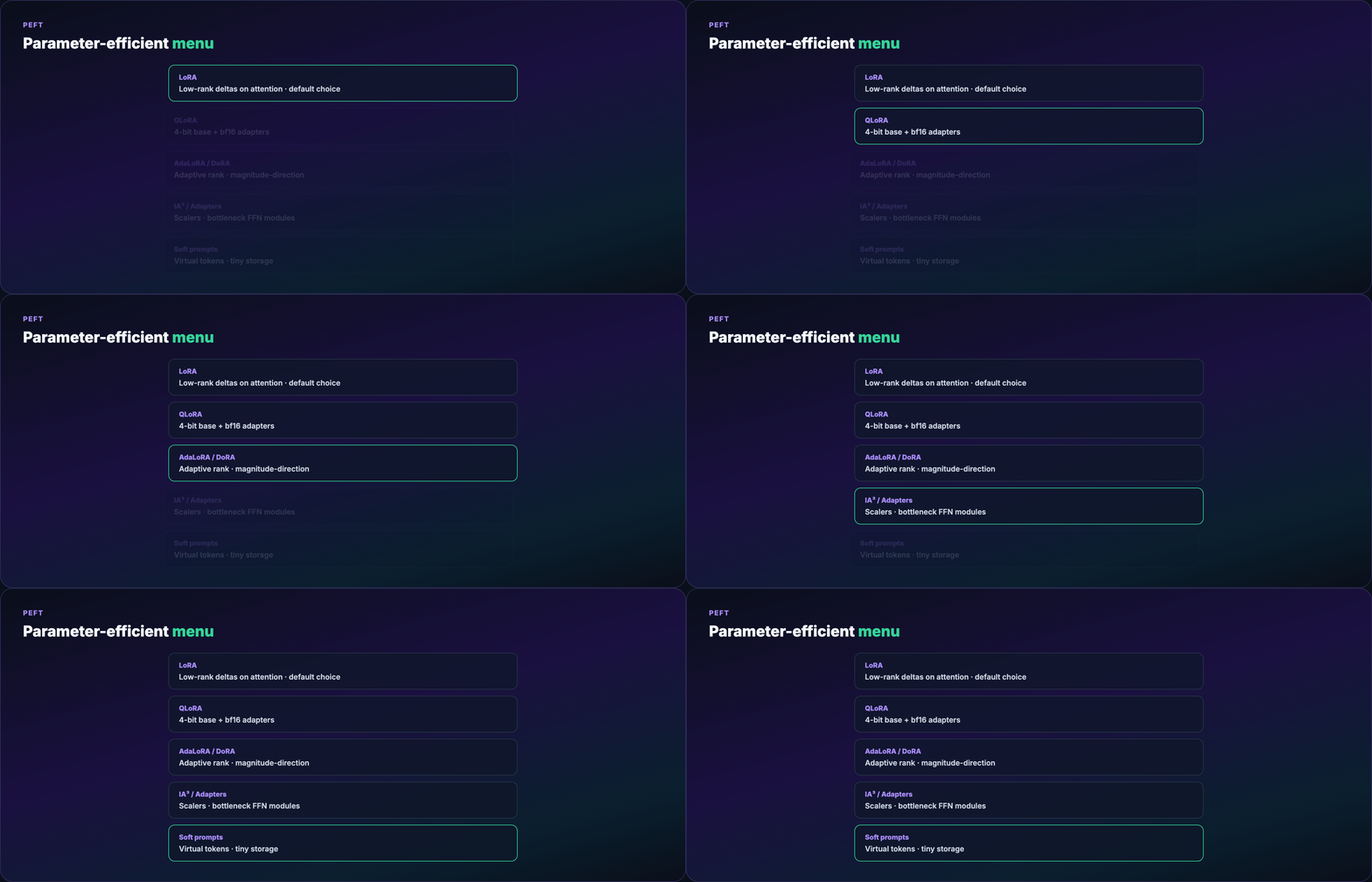
- LoRA — low-rank deltas on attention/MLP projections (default choice)
- QLoRA — LoRA + 4-bit frozen base (consumer-GPU friendly)
- AdaLoRA — adaptive rank budget across layers
- DoRA — magnitude + direction decomposition of updates
- IA³ — learned scalers on activations (very few params)
- Adapters — bottleneck FFN modules inserted per layer
Family D — Alignment
After SFT, models may still be verbose, sycophantic, or unsafe. Alignment methods optimize preferences.
- RLHF — reward model + reinforcement learning (PPO)
- DPO — direct preference optimization; no separate RM at train time
- ORPO / KTO / SimPO — variants reducing reference models or simplifying data
- GRPO — group-relative policy optimization; popular in reasoning RL (DeepSeek-R1 line)
Family E — Federated & privacy-preserving
Train adapters on-device or per-tenant; aggregate updates without pooling raw text. Useful for healthcare, finance, and keyboard-personalization — higher engineering complexity, different threat model.
Part 4 — LoRA in depth
Low-Rank Adaptation assumes weight changes during fine-tuning live in a low-dimensional subspace. Instead of updating a full matrix (W \in \mathbb{R}^{d \times d}), learn:
[ W' = W + \frac{\alpha}{r} \cdot BA ]
where (B \in \mathbb{R}^{d \times r}), (A \in \mathbb{R}^{r \times d}), and rank (r \ll d) (often 8–64).

Why it works
Large models are over-parameterized. Empirically, task-specific movement in weight space is low-rank. LoRA trains only (A) and (B); (W) stays frozen — preserving pre-trained knowledge and slashing optimizer memory.
Example (4096×4096 projection, r=8):
- Full update: ~16.8M trainable params per matrix
- LoRA: ((4096 \times 8) \times 2 \approx 65)K — ~0.4%
Across all targeted layers, total trainable params are often 0.1–1% of the base.
Hyperparameters
| Knob | Role |
|---|---|
r |
Rank — higher = more capacity, more VRAM |
lora_alpha |
Scales the adapter; common pattern alpha = 2r |
target_modules |
Which layers get adapters — q_proj, v_proj common; add k_proj, o_proj, MLP for harder tasks |
lora_dropout |
Regularization on adapter path |
Initialization
(B) starts at zero so (BA = 0) at step zero — the model begins identical to the base. Gradients flow only through adapters.
Inference options
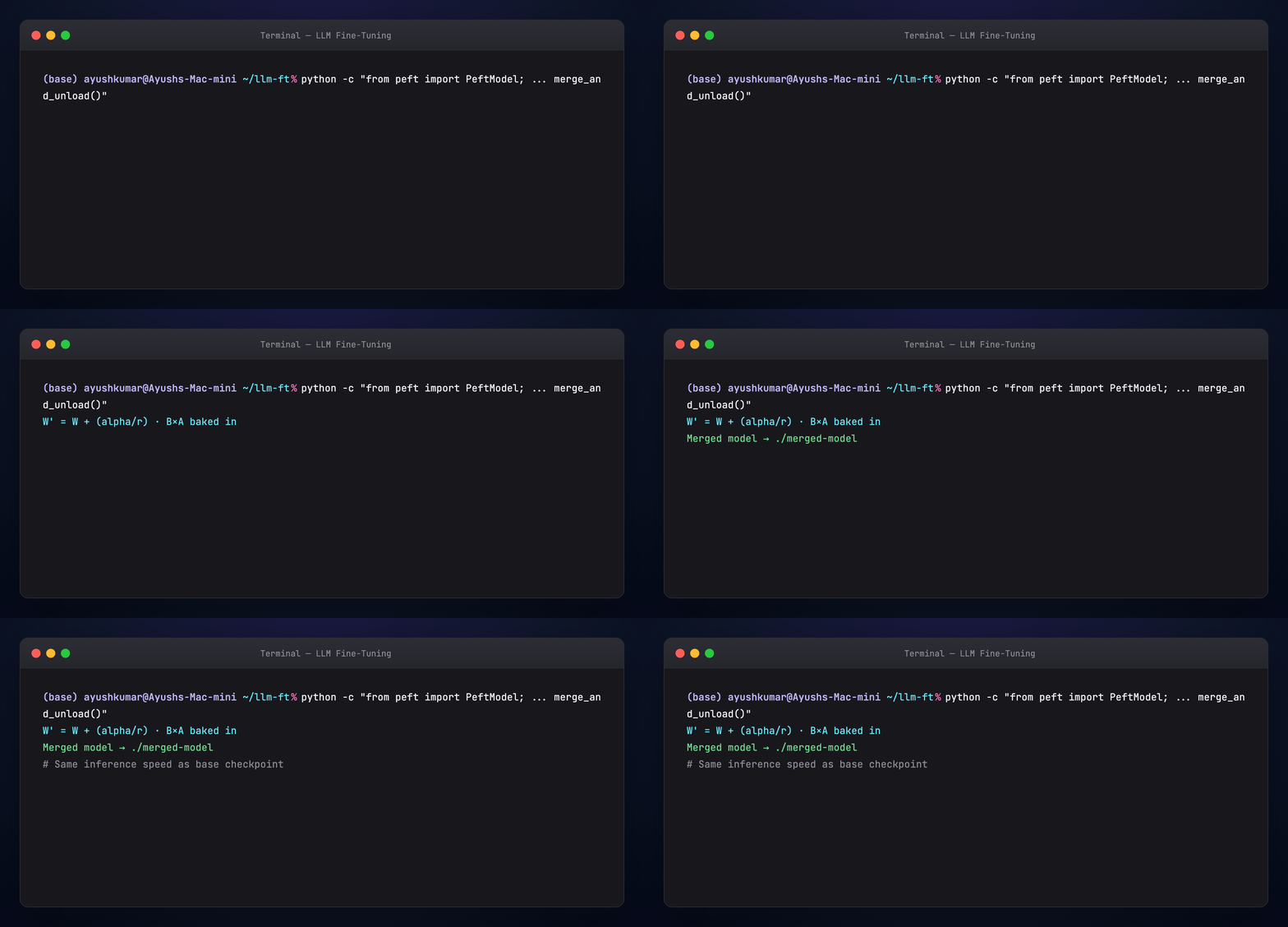
Merge: compute (W' = W + \frac{\alpha}{r} BA) once; deploy like a normal checkpoint — zero runtime overhead.
Hot-swap: keep base + multiple small adapter files; load per tenant/task — one 7B base, dozens of 50MB LoRAs.
Where to apply LoRA
Transformers repeat attention + MLP blocks. Most recipes target attention projections first; add MLP (gate_proj, up_proj, down_proj) when task needs factual recall or style depth.
LoRA tends to need fewer examples than full fine-tuning because the base prior stays intact.
Part 5 — Quantization and QLoRA
LoRA reduces trainable params. Quantization reduces stored precision.
Quantization basics
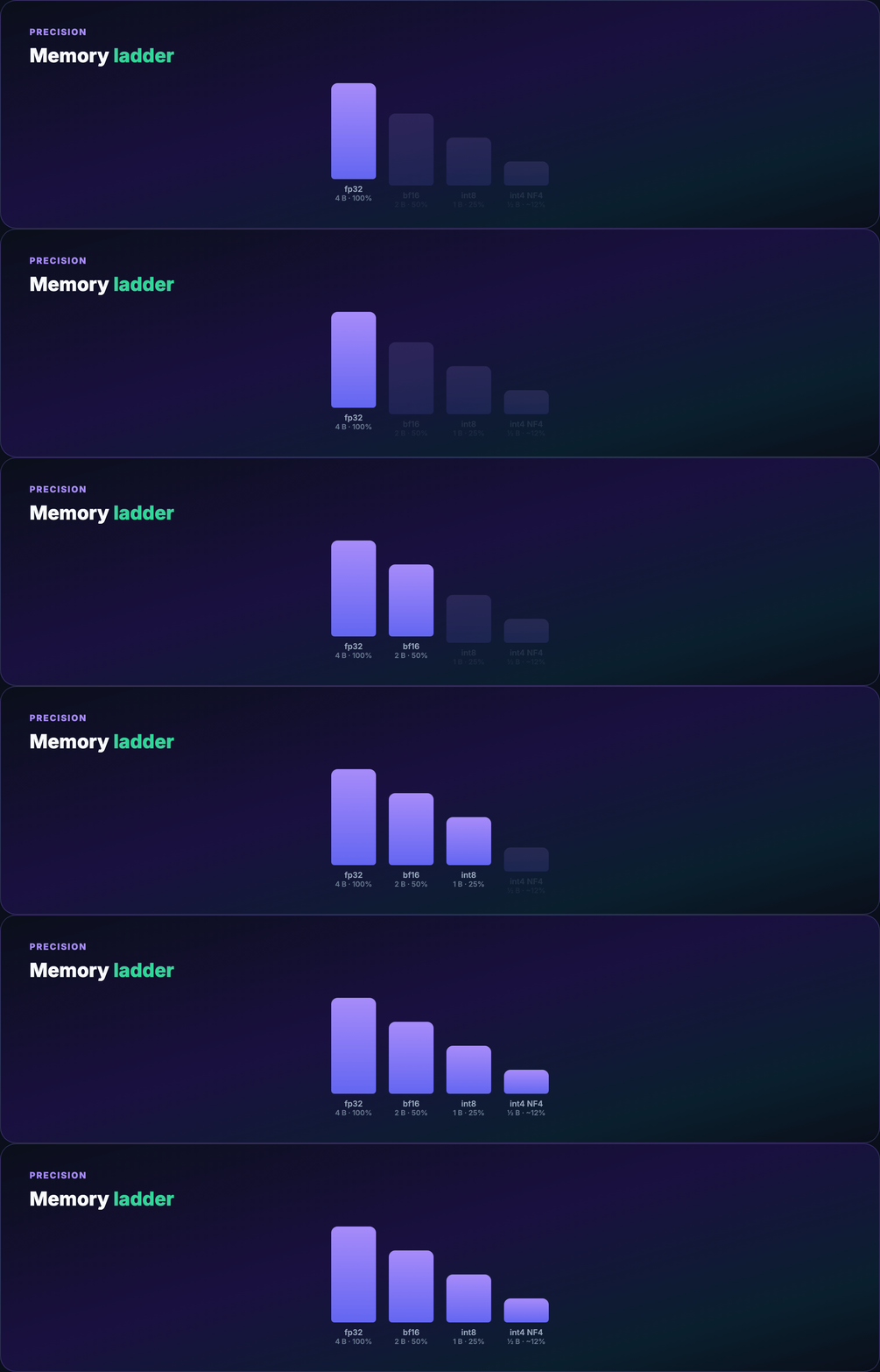
- fp32 — training reference; 4 bytes/weight
- bf16/fp16 — standard mixed-precision training; 2 bytes/weight
- int8 / int4 — inference (and QLoRA storage); 1 or 0.5 bytes/weight
Fewer bits → rounding error. Inference often tolerates 4-bit with minimal quality loss; training in 4-bit directly is unstable.
QLoRA recipe
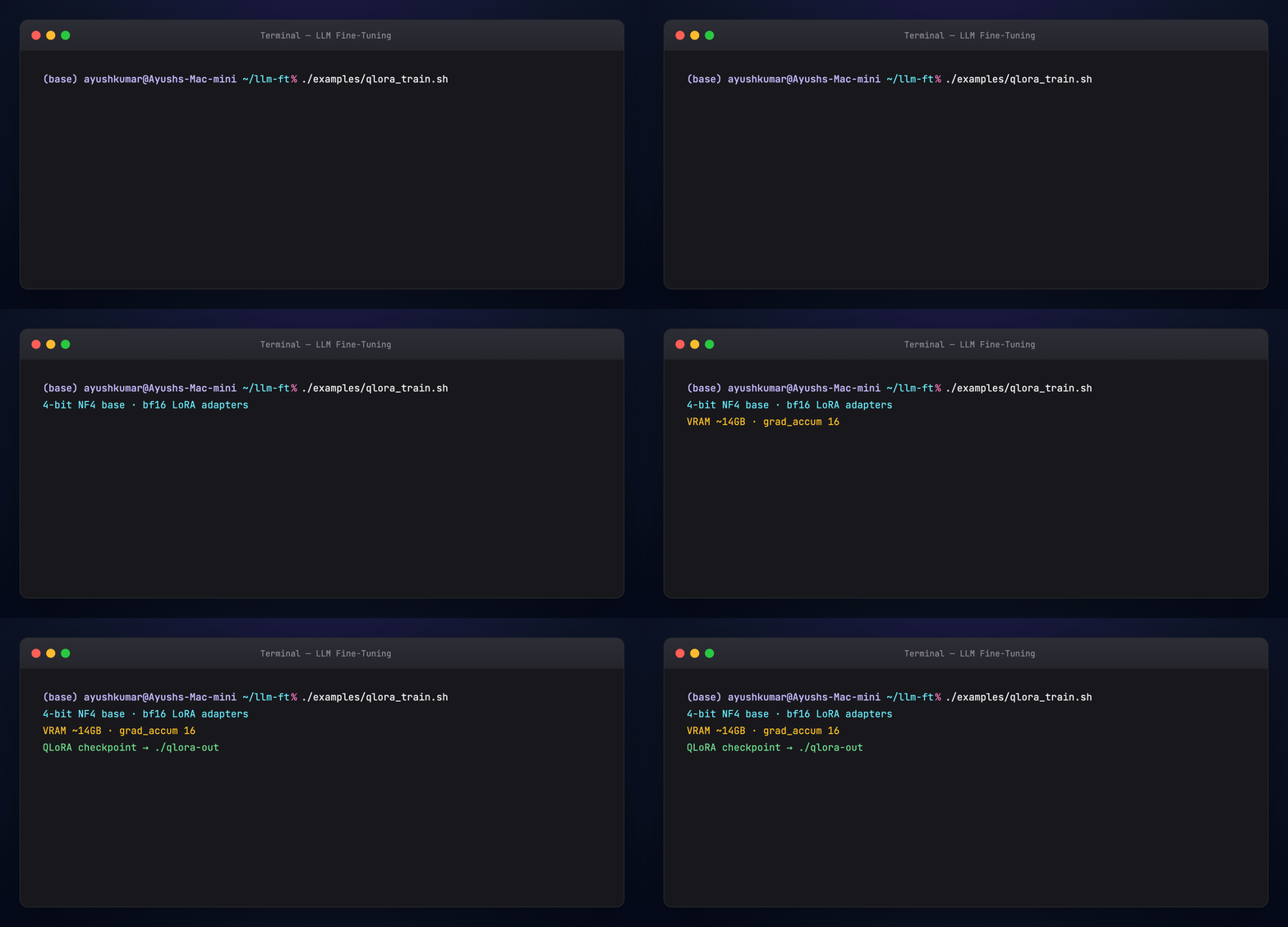
- Load base weights in 4-bit NF4 (NormalFloat 4-bit — levels tuned for Gaussian weight distributions)
- Keep LoRA adapters in bf16/fp16
- Forward pass: dequantize 4-bit → compute in higher precision → discard
- Backward: gradients update adapters only
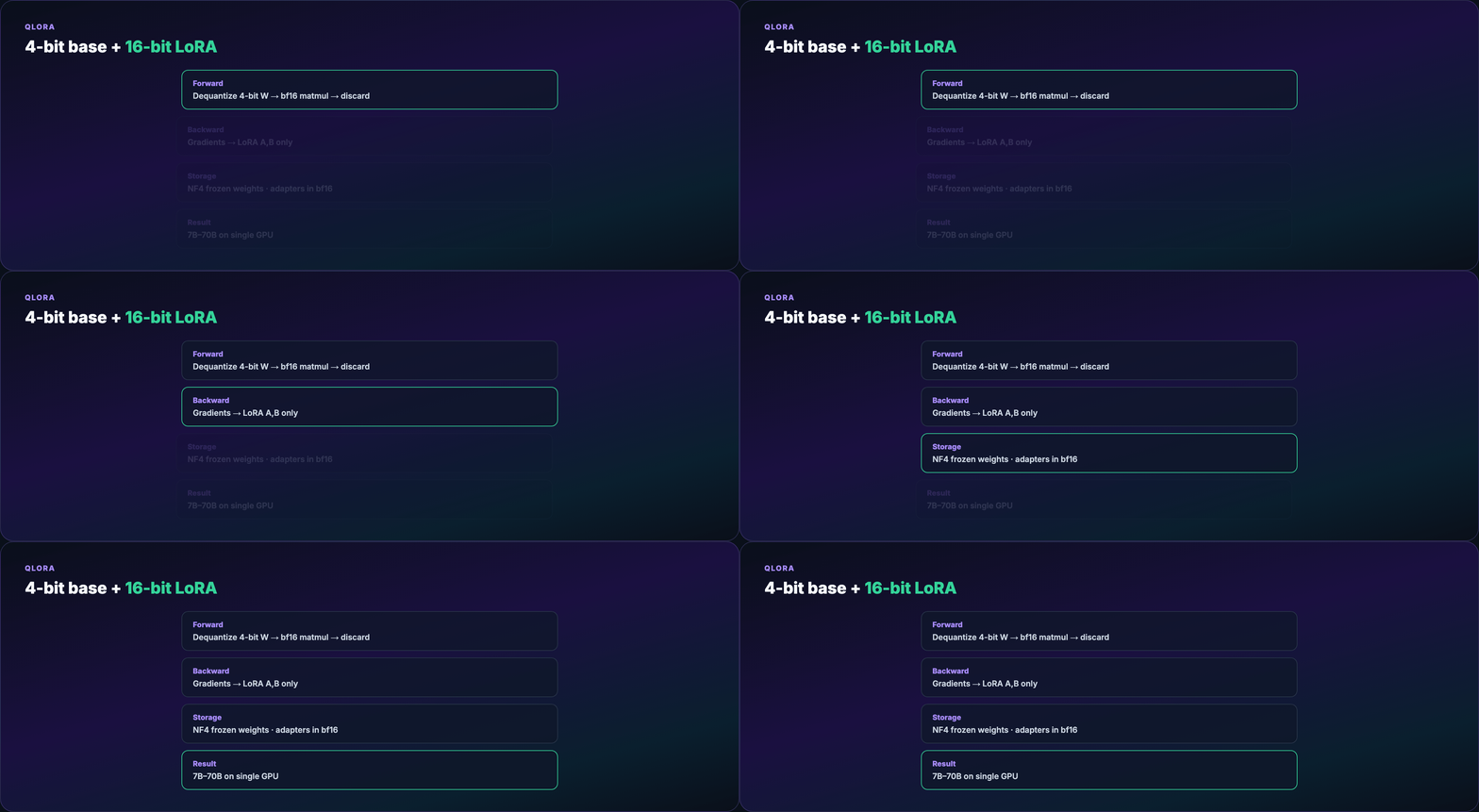
Trade-off: dequantization adds wall-clock time. The alternative on a 24GB card is often no training at all.
QLoRA democratized 7B–70B adaptation on single high-end GPUs and cloud spot instances.
Inference quantization
Serving in 4-bit/8-bit (GPTQ, AWQ, bitsandbytes) cuts memory and raises throughput. Common pattern: train QLoRA → merge → quantize for deploy, or serve base + adapter with vLLM/llama.cpp.
Part 6 — Supervised fine-tuning workflow
A practical SFT pipeline:
- Define eval first — holdout prompts + automatic metrics (exact match, JSON schema, LLM-judge)
- Curate data — dedupe, filter toxicity, balance task types
- Choose base — instruct checkpoint if you want chat; base + SFT if you need full control
- Pick method — LoRA default; QLoRA if VRAM-bound
- Train — watch loss and eval; early-stop on eval regression
- Merge or serve adapter — A/B against prompt-only baseline
- Regression suite — general knowledge probes to catch forgetting
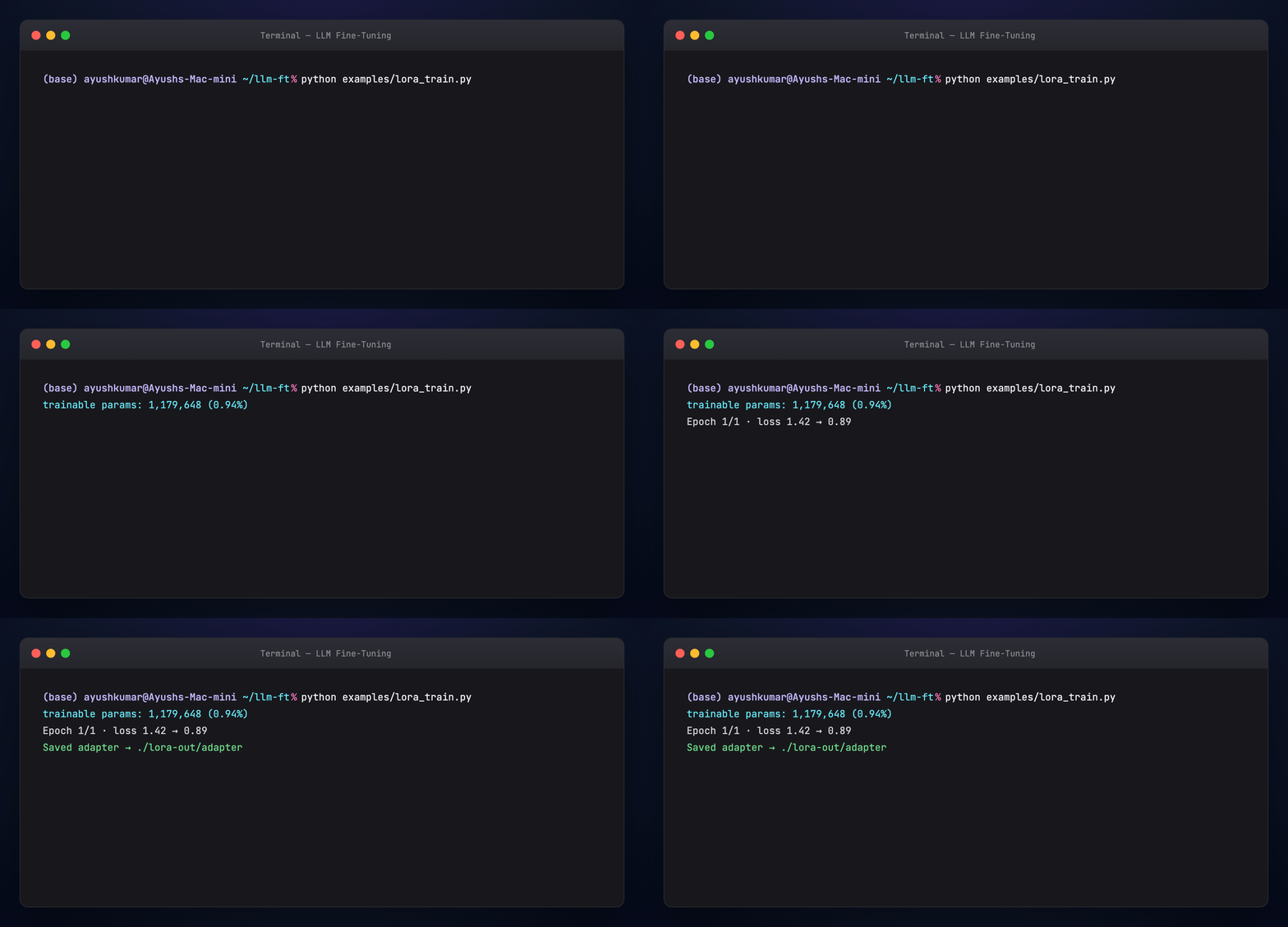
See examples/lora_train.py for a minimal HuggingFace Trainer + PEFT script.
Part 7 — Alignment after SFT
SFT teaches what to say. Alignment teaches what we'd prefer among valid answers — shorter, safer, more honest, better reasoning.
Part 8 — RLHF (classic three-stage)

Stage 1 — SFT. Human-written demonstrations: (prompt, ideal_response).
Stage 2 — Reward model (RM). Train a classifier on preference pairs (prompt, chosen, rejected). The RM scores how good a completion is.
Stage 3 — RL fine-tune. Policy model generates completions; PPO (or similar) maximizes RM score with a KL penalty to the SFT model so it doesn't drift into gibberish.
Strengths: flexible reward shaping, long-horizon optimization.
Costs: brittle training, RM hacking, heavy infra (separate RM, rollout generation, multiple models in memory).
Part 9 — DPO and preference learning
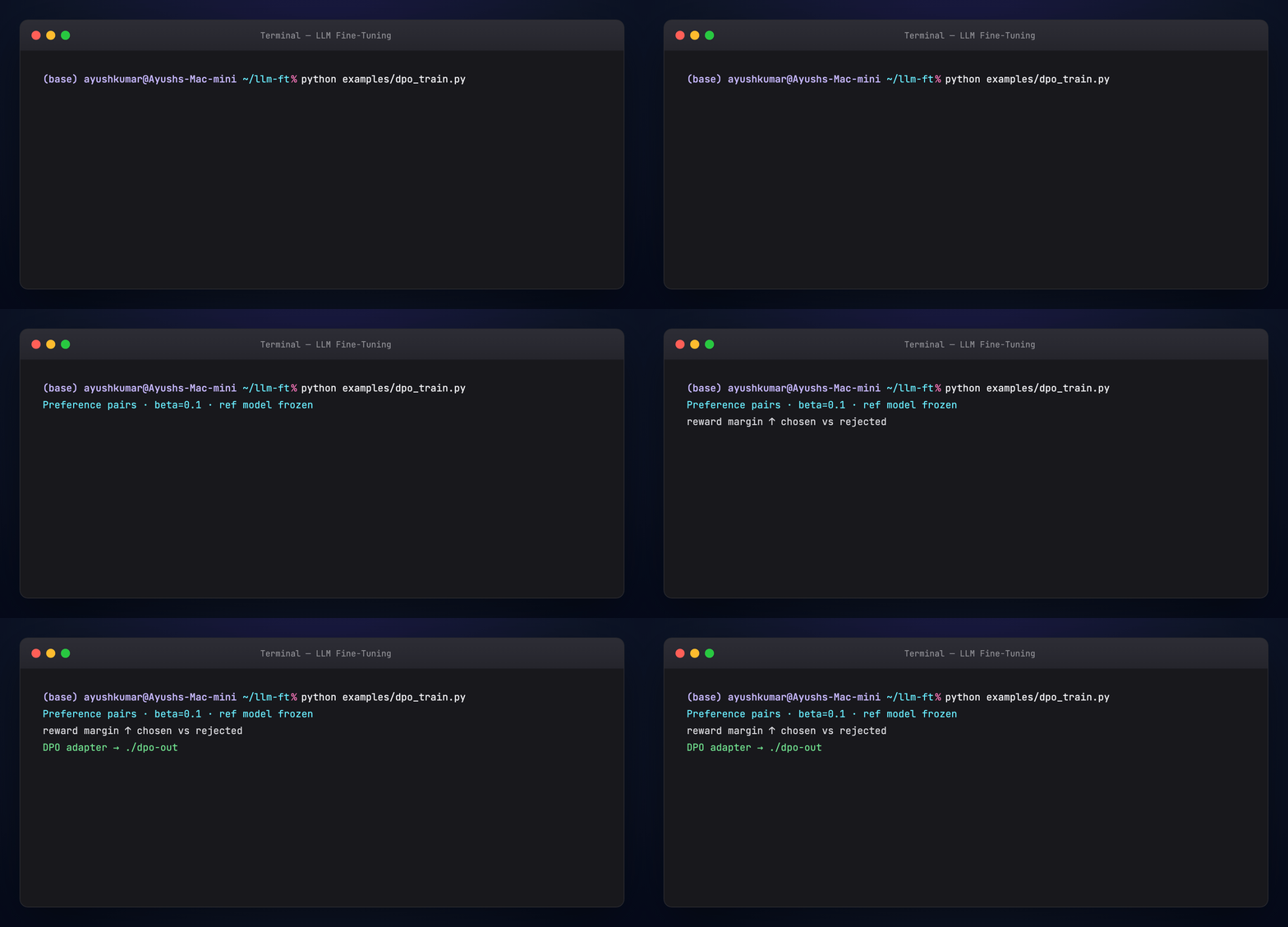
Direct Preference Optimization skips the explicit RM and PPO loop. Given pairs (x, y_w, y_l) — prompt, winner, loser — DPO updates the policy so it increases likelihood of winners vs losers relative to a frozen reference model.

Why teams like it: one training loop, stable-ish, works with LoRA, fits HuggingFace TRL.
Beta (β): controls how far you drift from the reference — higher = stay closer to SFT.
Related: ORPO (odds ratio), KTO (binary good/bad without strict pairs), SimPO (simplified preference objective).
Example: examples/dpo_train.py
Part 10 — GRPO (group-relative optimization)
GRPO samples multiple completions per prompt, scores them (rule-based verifier, unit tests, RM, or outcome check), and updates the policy using relative rankings within the group — no per-token value network like classic PPO.

Popular for math, code, and reasoning RL where you can automatically verify answers. DeepSeek-R1-style training brought GRPO into mainstream conversation.
When to consider GRPO: you have cheap automatic scoring and want exploration beyond static preference datasets.
Part 11 — Hands-on: install stack
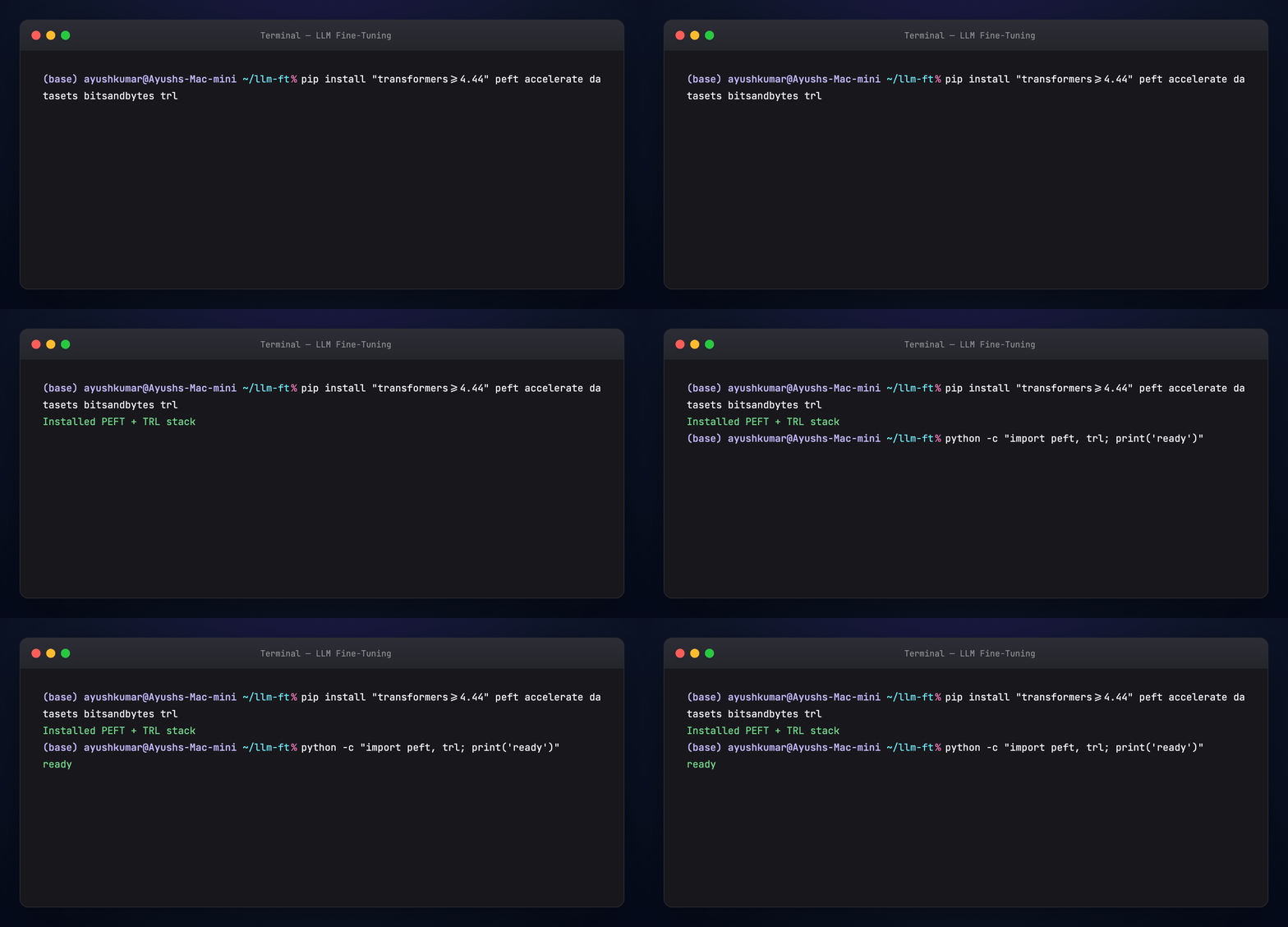
pip install "transformers>=4.44" peft accelerate datasets bitsandbytes trl
# CUDA machine for QLoRA; MPS/CPU can run small LoRA demos slowly
Part 12 — Hands-on: LoRA SFT
Key lines: LoraConfig(r=16, lora_alpha=32, target_modules=[...]), get_peft_model, standard Trainer.
After training:
python - <<'PY'
from peft import PeftModel
from transformers import AutoModelForCausalLM, AutoTokenizer
base = "meta-llama/Llama-3.2-1B-Instruct"
model = AutoModelForCausalLM.from_pretrained(base, device_map="auto")
model = PeftModel.from_pretrained(model, "./lora-out/adapter")
model = model.merge_and_unload()
model.save_pretrained("./merged-model")
PY
Part 13 — Hands-on: QLoRA via TRL CLI
Uses --load_in_4bit, --bnb_4bit_quant_type nf4, --use_peft. Tune gradient_accumulation_steps to fit VRAM.
Part 14 — Model merging and multi-adapter serving
Merge LoRA into base for simplest deployment.
Model merging (SLERP / TIES / DARE) — combine multiple fine-tunes into one checkpoint for blended capabilities; experimental, can produce unpredictable blends — always eval.
Multi-LoRA serving — vLLM and friends load one base + swap adapters per request — great for multi-tenant SaaS.
Part 15 — Choosing a technique (decision guide)
Start with prompts + eval. No training until metrics plateau.
Need domain + format, have 1–10K examples, one GPU: QLoRA SFT.
Need chat behavior on base model: LoRA SFT on instruct data.
Model is helpful but rambling / unsafe / off-brand: DPO on preference data (often 10K–100K pairs).
Need reasoning with verifiable rewards: explore GRPO / RL with automated graders.
Can't move data off device: federated LoRA or on-prem QLoRA.
Many tenants, tiny footprints: soft prompts or per-tenant LoRA files.
Part 16 — Evaluation and LLMOps hooks
Fine-tuning without eval is gambling. Borrow from LLMOps Part 11 patterns:
- Holdout prompts from production logs (redacted)
- Schema validators for JSON/XML outputs
- LLM-as-judge with human-labeled calibration set
- Regression probes — MMLU slice, general instruction following
- Trace tooling (Langfuse, W&B) — link training runs to online metrics
Retrain when: base model leapfrogs you, data drift shifts intent, or safety incidents trace to model not prompt.
Part 17 — Troubleshooting
Loss down, eval flat — data mislabeled, train/eval mismatch, or rank too low.
Model forgot general skills — lower LR, fewer epochs, LoRA instead of full FT, mix general examples.
OOM on QLoRA — reduce seq length, increase grad accumulation, lower rank, try 8-bit base.
DPO collapse / repetitive text — lower beta, check preference label noise, shorten responses in data.
Merged model worse than adapter — merge in fp32; verify lora_alpha and target modules match training.
Regenerate visuals
cd guides/llm-fine-tuning/assets
python3 render_mega_gif.py
python3 render_diagrams.py all
python3 render_terminal_gifs.py all
python3 render_blog_poster.py
cd ../../..
./scripts/prepare-docs.sh
Further reading
- LoRA paper · QLoRA paper
- DPO paper
- HuggingFace PEFT · TRL
- Daily Dose of Data — LLMOps series
- Cloud Girl — fine-tuning techniques overview
Summary
Fine-tuning is not one lever — it's a family of levers. LoRA/QLoRA make adaptation cheap enough to try; SFT teaches tasks and formats; DPO/RLHF/GRPO align behavior to human or automatic preferences. Climb the adaptation ladder before you train, eval before and after, and treat every checkpoint as a product with a maintenance story.