10 Steps to Build a Machine Learning Model — Explained Visually
Most tutorials jump straight to model.fit(). Real projects don’t.
Shipping a model means ten distinct stages — from scoping the problem to watching it decay in production. Picking the algorithm is one of those ten, not the whole job.
This guide walks through all ten. Each major stage has a GIF so you can see the flow, not just read a bullet list.
Hero image: assets/blog-poster-1200x600.png
Overview GIF: assets/gif-01-pipeline-overview.gif
How to read this guide
| Layer | What it covers |
|---|---|
| 10 steps (this article) | What practitioners actually do week by week |
| 6 macro stages (GIF 1) | How teams talk about the lifecycle in planning meetings |
| 7 GIFs | One visual per critical transition — some steps share a GIF |
The six macro stages are: Problem → Data → Model → Train → Evaluate → Deploy. Steps 1–10 zoom in inside that frame.
Step 1 — Define the problem and success metrics
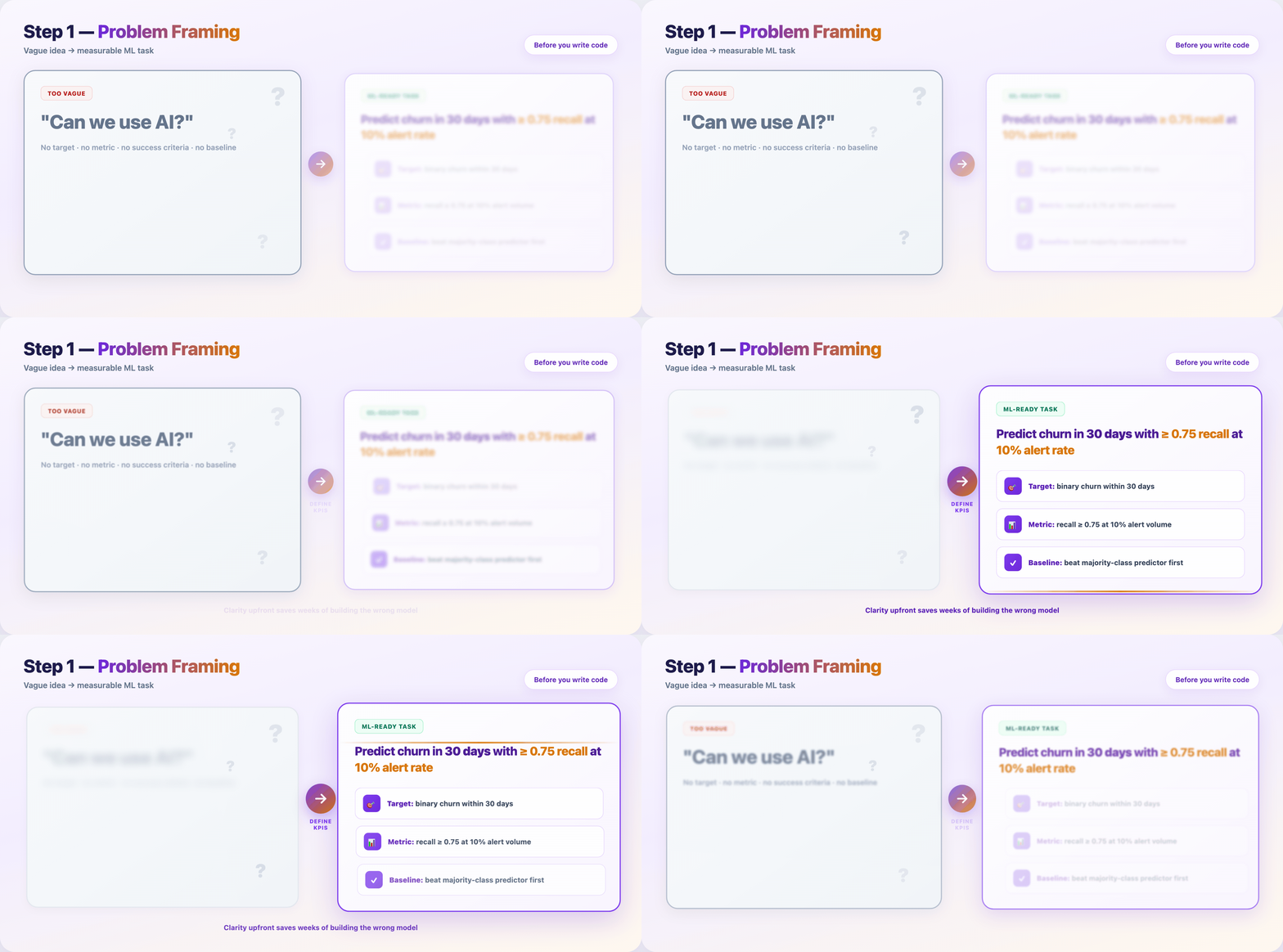
Before notebooks open, write down what “done” looks like.
- What decision should the model support?
- What metric matches the cost of being wrong? (precision vs recall, MAE vs RMSE)
- What baseline must you beat? (rules, majority class, last year’s manual process)
Deliverable: one-page brief — use case, constraints, KPIs, baseline.
Step 2 — Run a feasibility check
Not every idea needs machine learning.
Ask plainly:
- Do you have labeled examples (or a realistic labeling plan)?
- Is the signal in the data, or is this a product/process fix?
- Can you get to a MVP metric in the time you have?
If the answer is no, fix data collection or product scope first. Cheaper than training the wrong model.
Deliverable: go / no-go note with risks listed.
Step 3 — Collect raw data
Gather examples that match the problem you defined in Step 1.
- Pull from warehouses, APIs, logs, human labelers, or public datasets
- Track provenance — source, timestamp, version, PII rules
- Store raw data immutable; never overwrite the source copy
Common mistake: training on a convenience sample that doesn’t match production traffic.
Step 4 — Clean and explore (EDA)
Open the data before you trust it.
- Profile distributions, missing rates, duplicates, unit bugs
- Plot labels over time — sudden shifts often mean pipeline breaks
- Document findings; EDA notes become onboarding material later
Time spent here: often 20–40% of the project calendar. That’s normal.
Step 5 — Engineer features
Turn raw columns into signals the model can learn from.
- Ratios, aggregates, encodings, text tokens, date parts, embeddings
- Keep feature definitions in code (not one-off notebook cells)
- Version feature logic with the same discipline as model weights
Rule: if you can’t explain a feature to a teammate, don’t ship it.
Step 6 — Split data and kill leakage
Lock your evaluation story before training hype starts.
- Train / validation / test — test set stays sealed until the end
- Time-based splits for forecasting; group splits when rows aren’t independent
- Reject columns that encode the future (
future_spend, post-outcome fields)
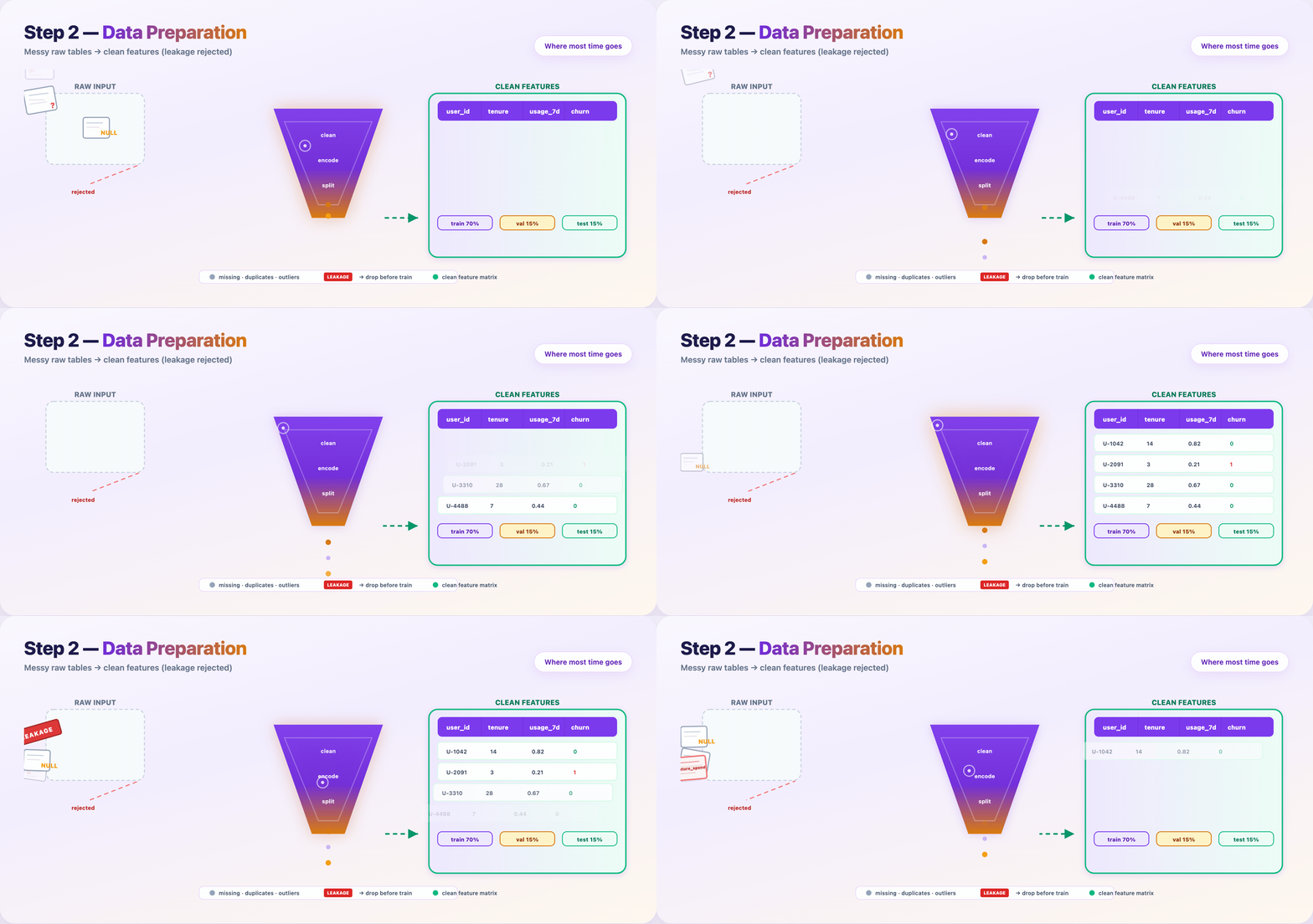
Deliverable: feature matrix + split indices + leakage audit checklist.
Step 7 — Choose a modeling approach
Match method to data size and interpretability — not Twitter hype.
| Data | Need explanations? | Often start with |
|---|---|---|
| Small | Yes | Logistic regression, linear models |
| Large | Yes | Random Forest, GBT + SHAP |
| Small | No | Gradient boosting (XGBoost/LightGBM) |
| Large | No | Neural networks |
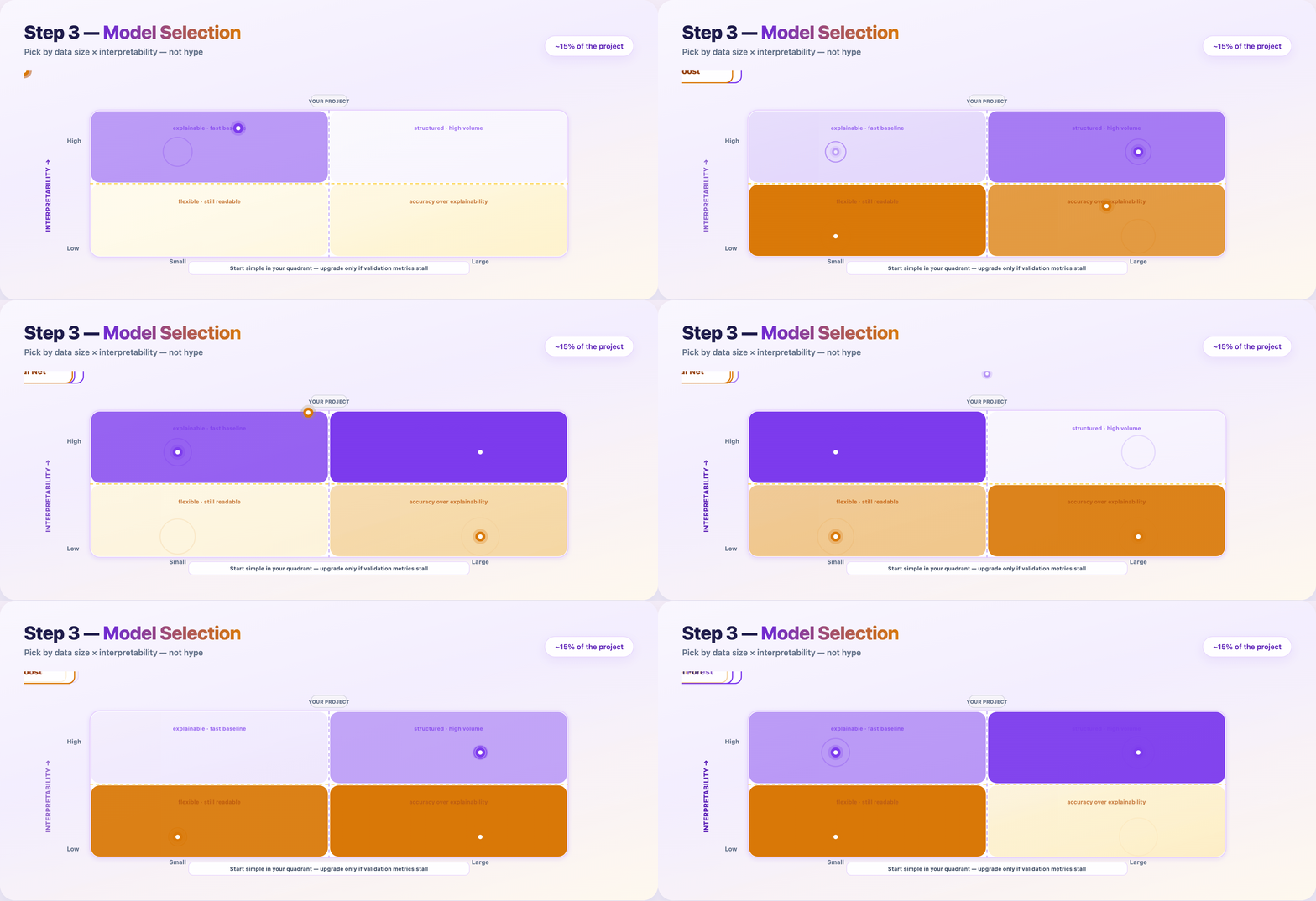
Train the simplest candidate that could work. Upgrade only when validation metrics justify the complexity.
Step 8 — Train and tune
Feed prepared data to the model. Iterate until validation performance plateaus.
Loop:
- Train on the training set
- Measure on the validation set
- Adjust hyperparameters or features
- Repeat
Log every run: data hash, config, metrics, runtime. Reproducibility saves you during audits and regressions.
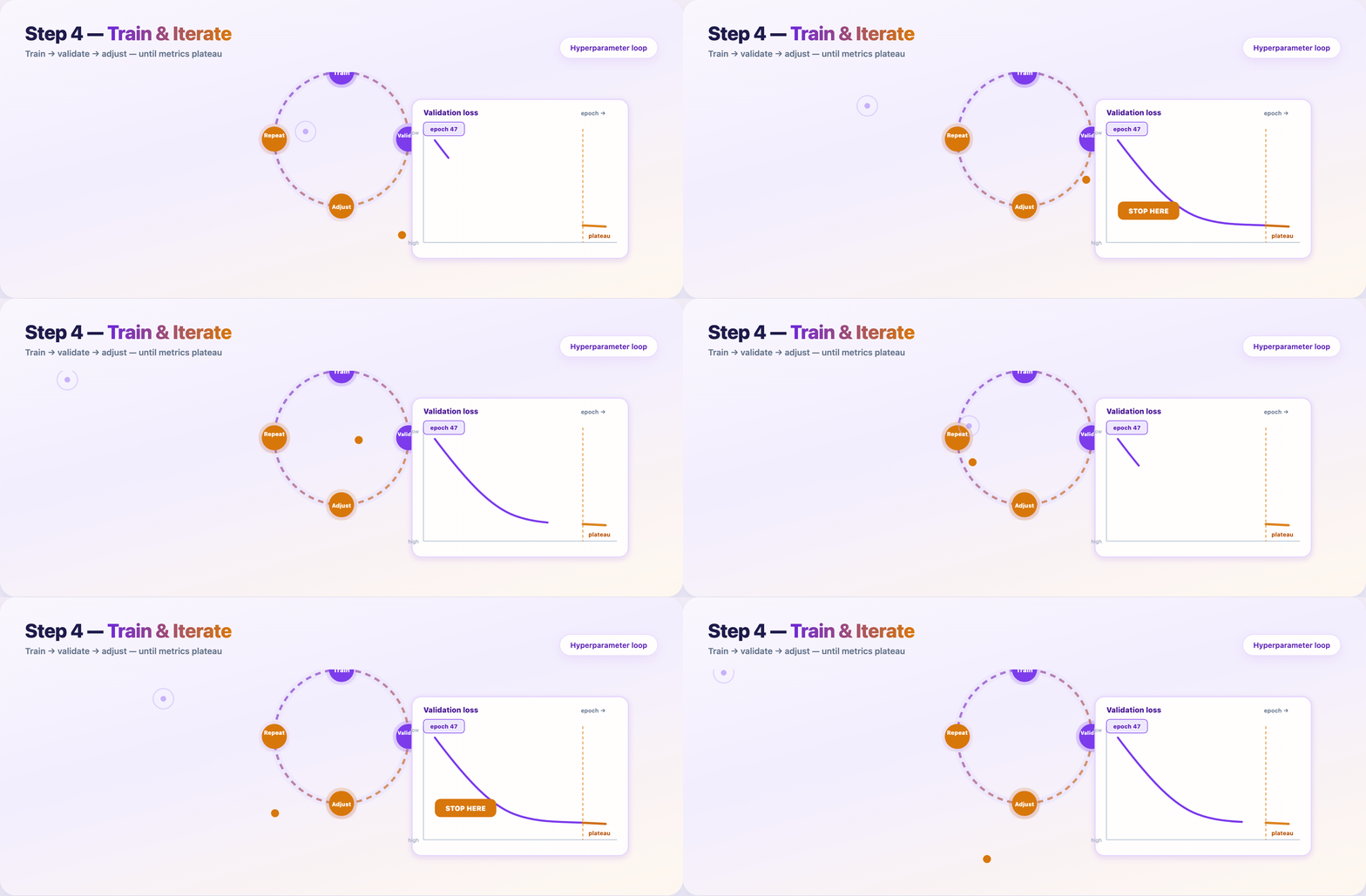
Stop when: validation metric gains shrink below your noise floor — not when the leaderboard looks pretty.
Step 9 — Evaluate on the held-out test set
The test set gets one shot. No peeking during tuning.
- Report metrics that match Step 1 KPIs
- Slice by region, device, cohort, language — aggregates hide failures
- Check fairness across groups; error clusters point back to Steps 4–6
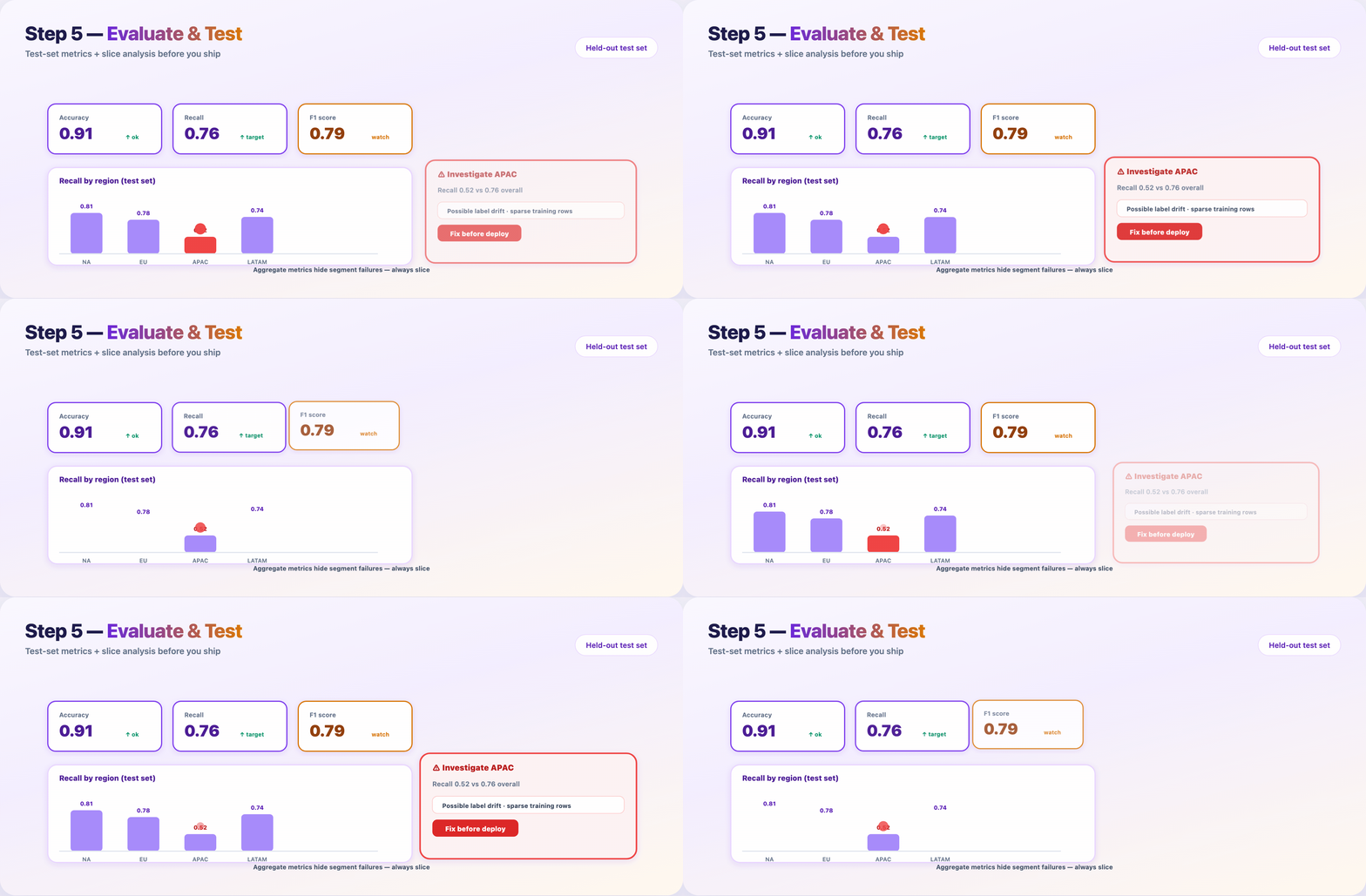
If a slice fails, don’t deploy and hope. Fix data or modeling, then re-run from Step 8.
Step 10 — Deploy, monitor, and retrain
Package the model, ship an API, watch it in the wild.
Typical path:
- Serialize artifact (
v2.4.pkl, ONNX, SavedModel) - Containerize (Docker)
- Deploy behind
/predicton cloud or edge - Monitor latency, errors, input drift, prediction drift
- Retrain or rollback when alerts fire
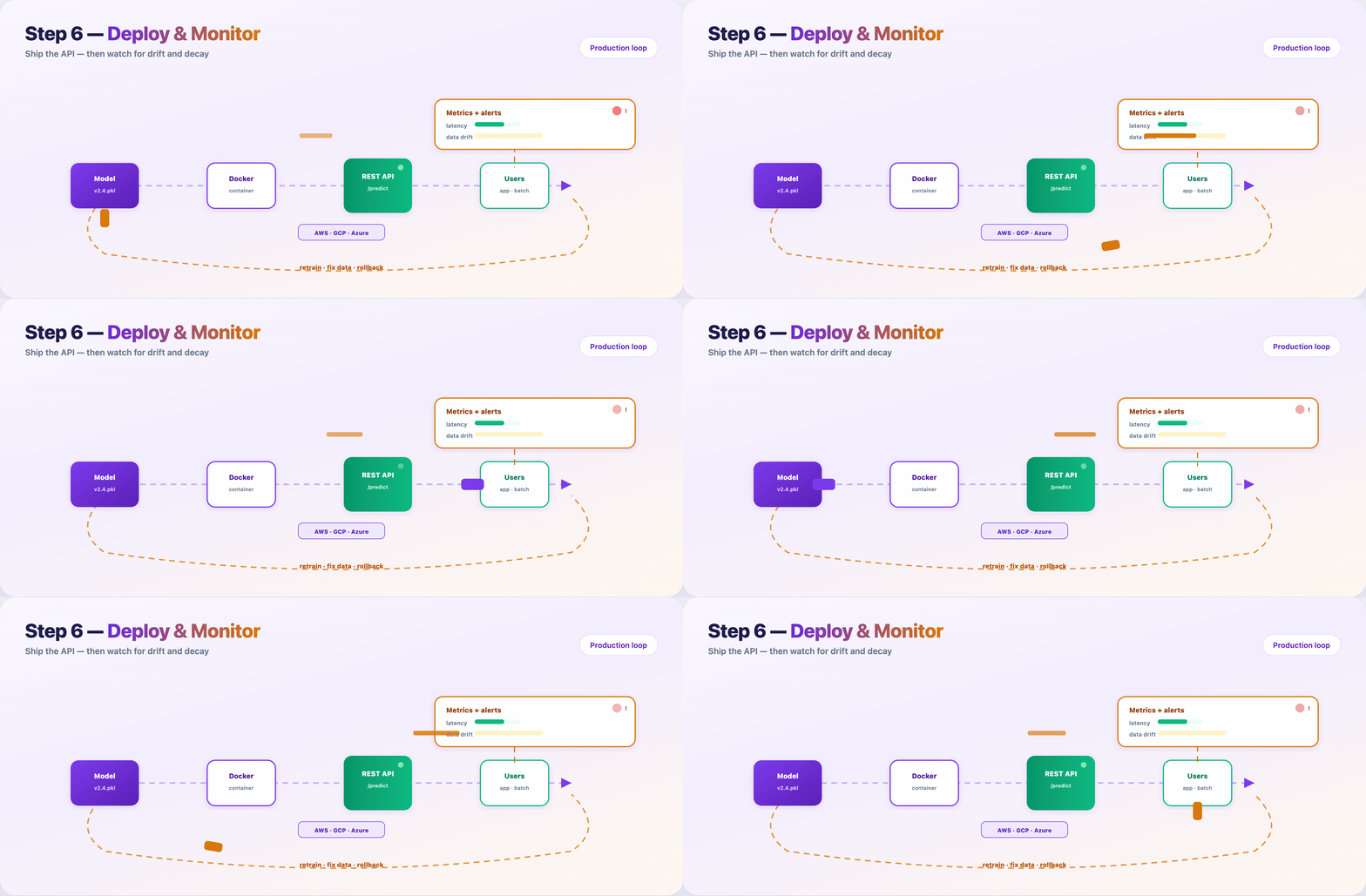
Models rot. User behavior shifts. Upstream schemas change. Monitoring is not optional — it’s Step 10 of the same pipeline.
The ten steps at a glance
| # | Step | Macro stage | GIF |
|---|---|---|---|
| 1 | Define problem & KPIs | Problem | GIF 2 |
| 2 | Feasibility check | Problem | — |
| 3 | Collect data | Data | GIF 3 |
| 4 | Clean & explore (EDA) | Data | GIF 3 |
| 5 | Feature engineering | Data | GIF 3 |
| 6 | Split & leakage audit | Data | GIF 3 |
| 7 | Choose model | Model | GIF 4 |
| 8 | Train & tune | Train | GIF 5 |
| 9 | Evaluate & test | Evaluate | GIF 6 |
| 10 | Deploy & monitor | Deploy | GIF 7 |
Where the time actually goes
| Phase | Steps | Typical calendar share |
|---|---|---|
| Planning | 1–2 | 5–10% |
| Data | 3–6 | 40–60% |
| Modeling | 7–8 | 15–25% |
| Validation | 9 | 5–10% |
| Production | 10 | 10–20% (ongoing) |
The algorithm (Steps 7–8) is often under a quarter of the work. The rest is clarity, data, engineering, and ops.
FAQ
Should my blog say 6 steps or 10?
Use 10 in the title for depth and SEO (“complete ML pipeline”). Mention the 6 macro stages once in the intro so readers who know MLOps diagrams still feel at home.
Do I need ten GIFs?
No. Seven is enough if Steps 3–6 share the data-prep funnel GIF and Steps 1–2 share the problem-framing GIF.
What’s the single most skipped step?
Step 2 (feasibility) and Step 6 (leakage audit). Skipping them causes the most expensive rework.
When do I stop training?
When validation metrics plateau and the model beats your Step 1 baseline on the metrics that matter for the product.
Publish checklist
- [ ] Hero:
blog-poster-1200x600.png(PNG, not GIF) - [ ] GIF 1 after intro paragraph
- [ ] GIFs 2–7 under matching step sections
- [ ] Meta description: Ten steps to build a machine learning model — from KPIs and data prep to training, evaluation, deployment, and monitoring.
- [ ] LinkedIn: short hook in post; full URL in first comment