Loop Engineering — Full Visual Guide
Design AI systems that act, observe, and repeat until a goal is met — not one-shot prompts with you as the checkpoint between every step.
References (original guide, not copies): Cloud Girl — Loop Engineering · MindStudio — Loop Engineering for coding agents
Format matches our LLM Fine-Tuning and OpenClaw guides: prose, lists, animated diagram + terminal GIFs.
What you'll understand at the end
- Why manual prompt-review cycles hit a ceiling before model quality does
- What a single-agent loop is — and when you need a fleet
- Open vs closed loops — exploration vs production budgets
- The five parts of a well-engineered loop (goal, tools, context, termination, errors)
- Common patterns: retry, plan-execute-verify, explore-narrow, human-in-the-loop
- How frameworks (LangGraph, Swarm, Hermes, OpenClaw) map to loop infrastructure
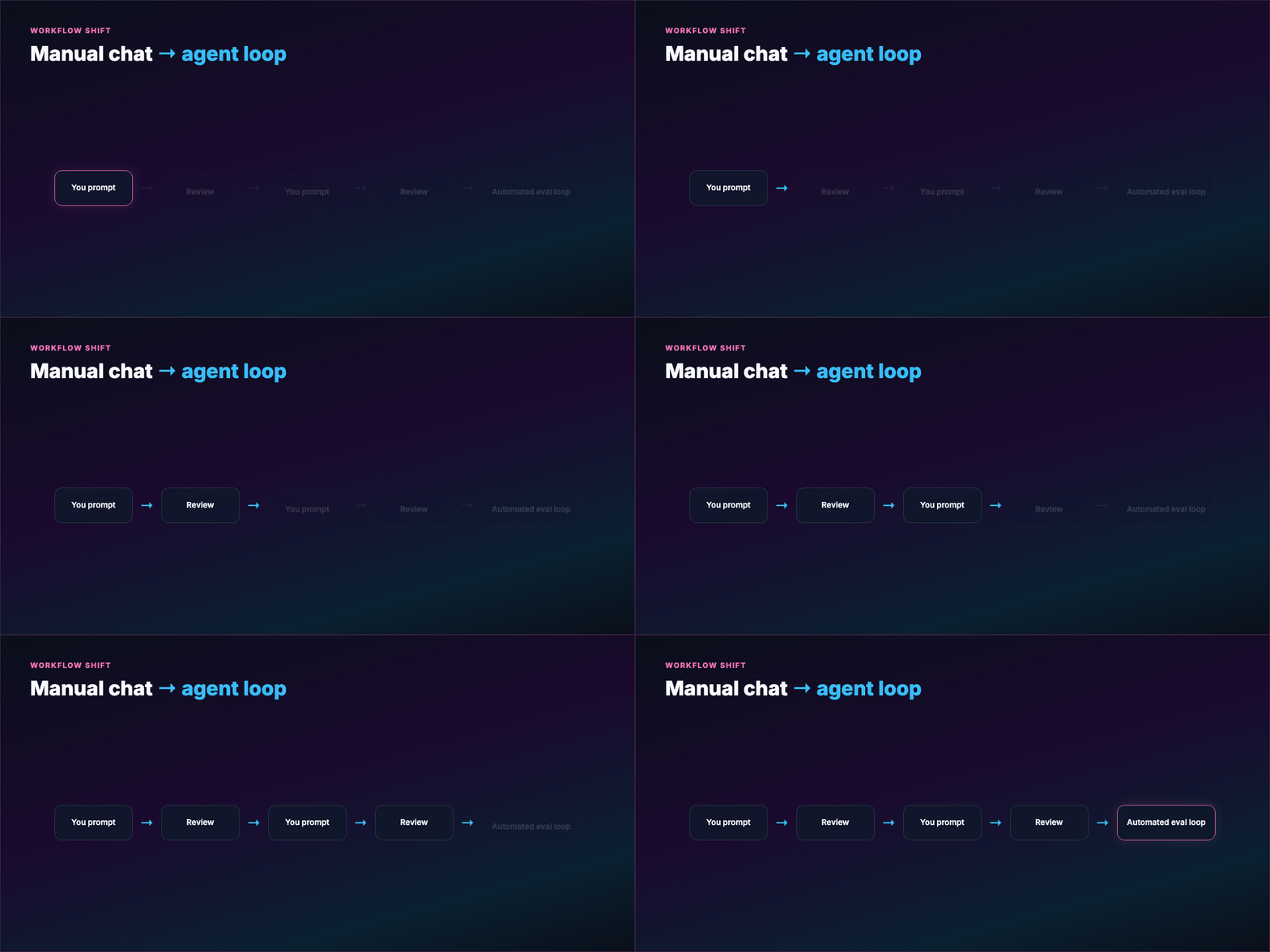
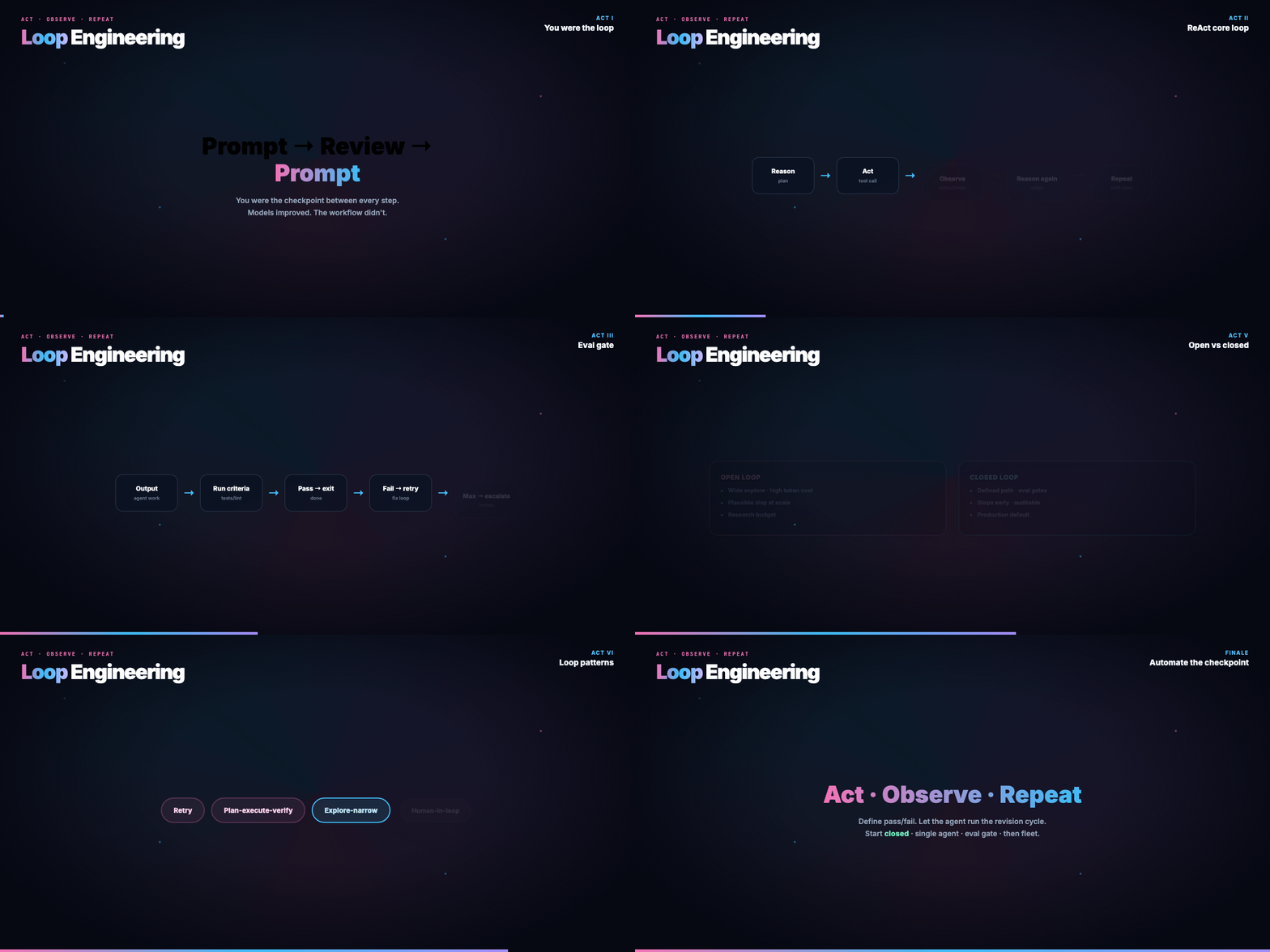
One-GIF overview (blog hero): mega-loop-everything.gif — manual chat → ReAct → eval gate → five parts → open/closed → patterns (~12s).
Introduction — you were the loop
For years the default workflow was identical whether you were drafting email or refactoring a repo:
- Open chat
- Type a request
- Review output
- Type the next request
You were the revision cycle. That made sense when models were unreliable — a human gate at every step stopped errors from compounding.
Models improved. The workflow didn't. Loop engineering automates the checkpoint: you define the goal and the pass/fail standard; the agent runs research → produce → evaluate → fix → repeat until the bar clears or a stop rule fires.
This is the architecture behind serious coding agents (Claude Code, Codex-style agents, Hermes ReAct runtime) and production agentic workflows.
Part 1 — The one-task problem
Every time you prompt for the next micro-step, you decide things the agent should decide:
- Where to look in the codebase
- Whether the draft is good enough
- What still needs work
That's hiring a writer and approving every paragraph. You get output — but you're running the operation, not delegating it.
The fix isn't necessarily a bigger model. It's rewiring the control flow from linear chat to a goal-driven loop.
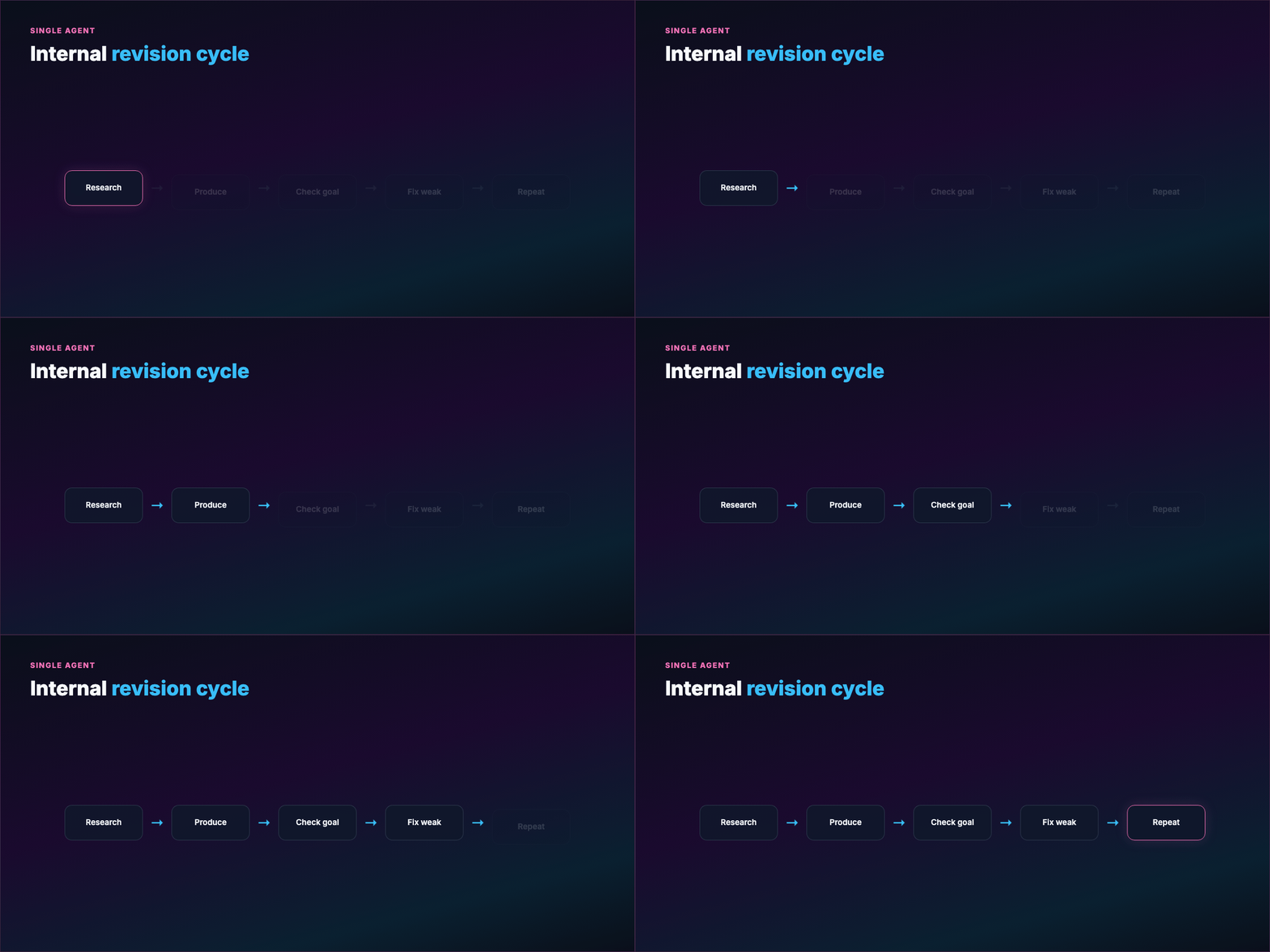
Part 2 — What a loop actually is
A loop is a repeating cycle:
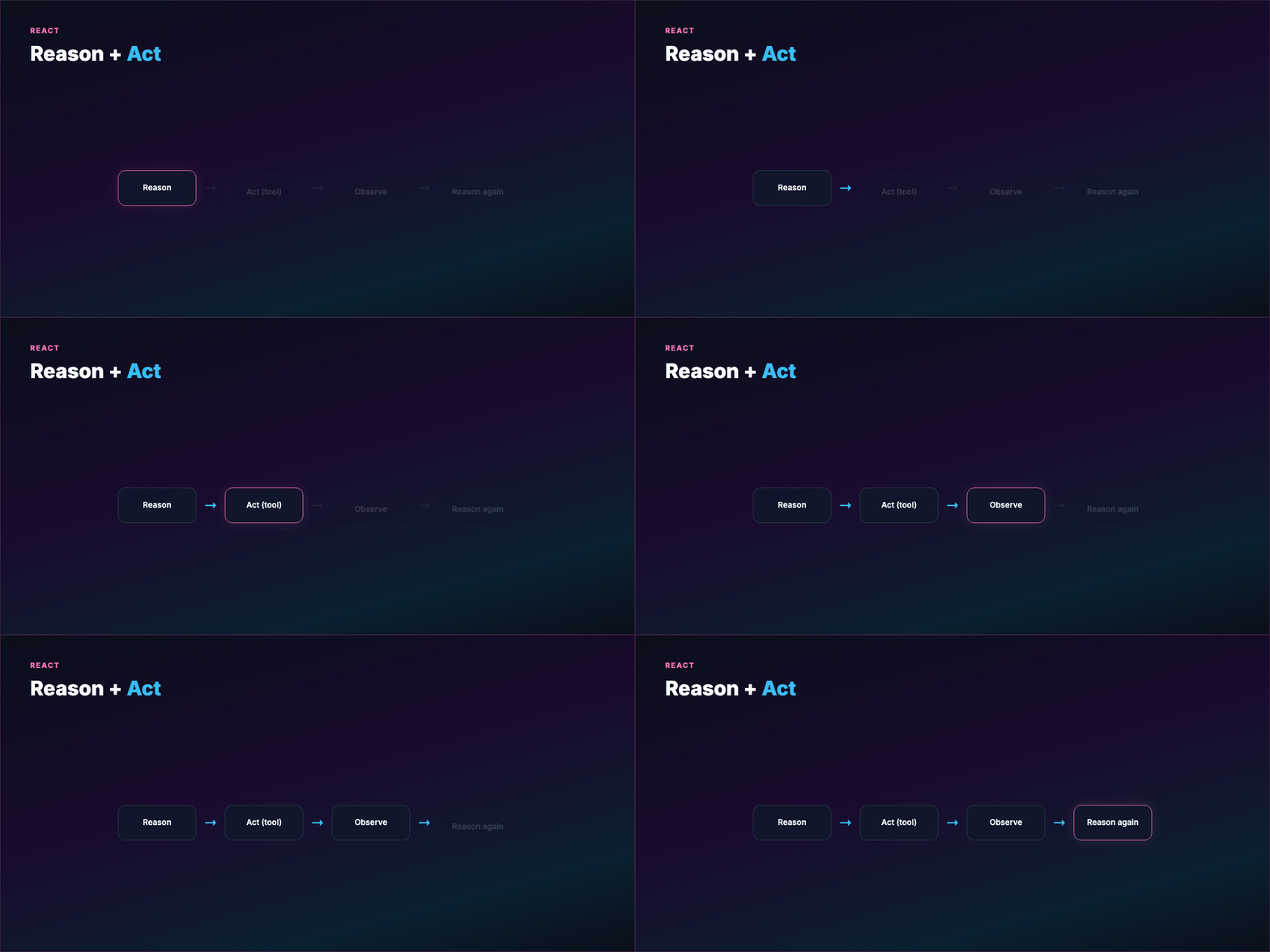
- Act — tool call, code write, search, shell command
- Observe — stdout, test results, linter, API response
- Reason — what failed, what to try next
- Repeat until termination
This traces to ReAct (Reason + Act): interleave thinking with environment feedback instead of guessing once and stopping.
Analogy: A writer revising their own manuscript — draft, read with fresh eyes, mark weak sections, fix, read again — without asking the editor after every sentence. You hand over the revision cycle, not just the first draft.
Part 3 — What makes or breaks the loop
Almost none of the engineering is "pick a smarter model." Two design choices dominate:
Evaluation gate — What counts as passing? Vague ("looks good") → infinite loops or arbitrary stops. Concrete ("all pytest green + ruff clean") → auditable exits.
Stopping condition — Success, max iterations, no-progress streak, escalation to human.
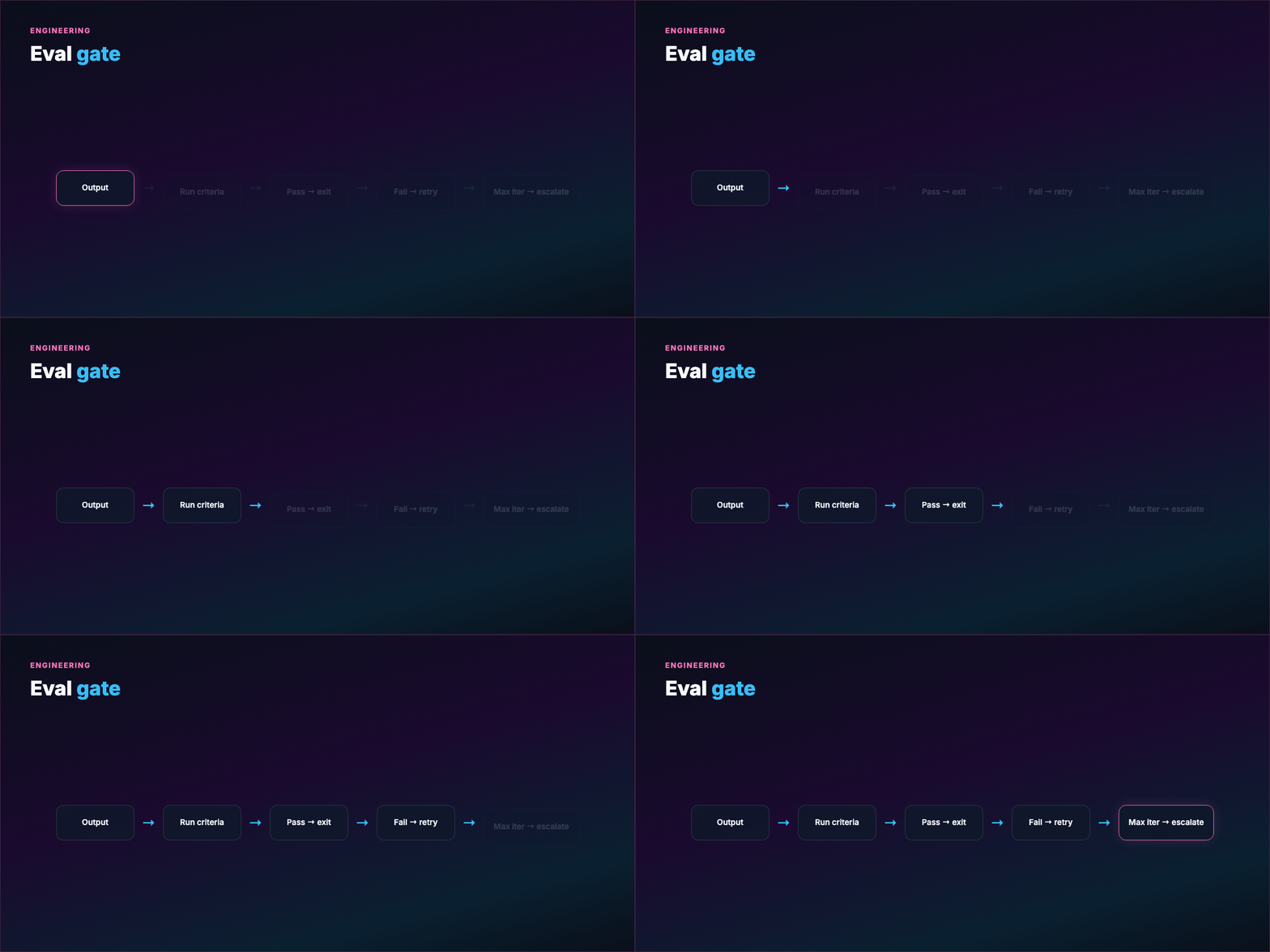
See examples/eval-gate.yaml for a harness template.
Part 4 — When one agent isn't enough
A single looping agent handles bounded tasks well. Real projects mix cognitive modes:
- Research vs planning vs execution vs review
- Long context → lost-in-the-middle — front and back of window get more attention
Forcing one agent to be researcher, planner, implementer, and reviewer is like asking your best writer to fact-check every claim, copy-edit, and run the press.
Fleet looping: an orchestrator owns the goal, decomposes work, assigns specialists, each running their own sub-loop. Subagents handle narrow slices. Eval gates at every layer stop bad work from propagating.
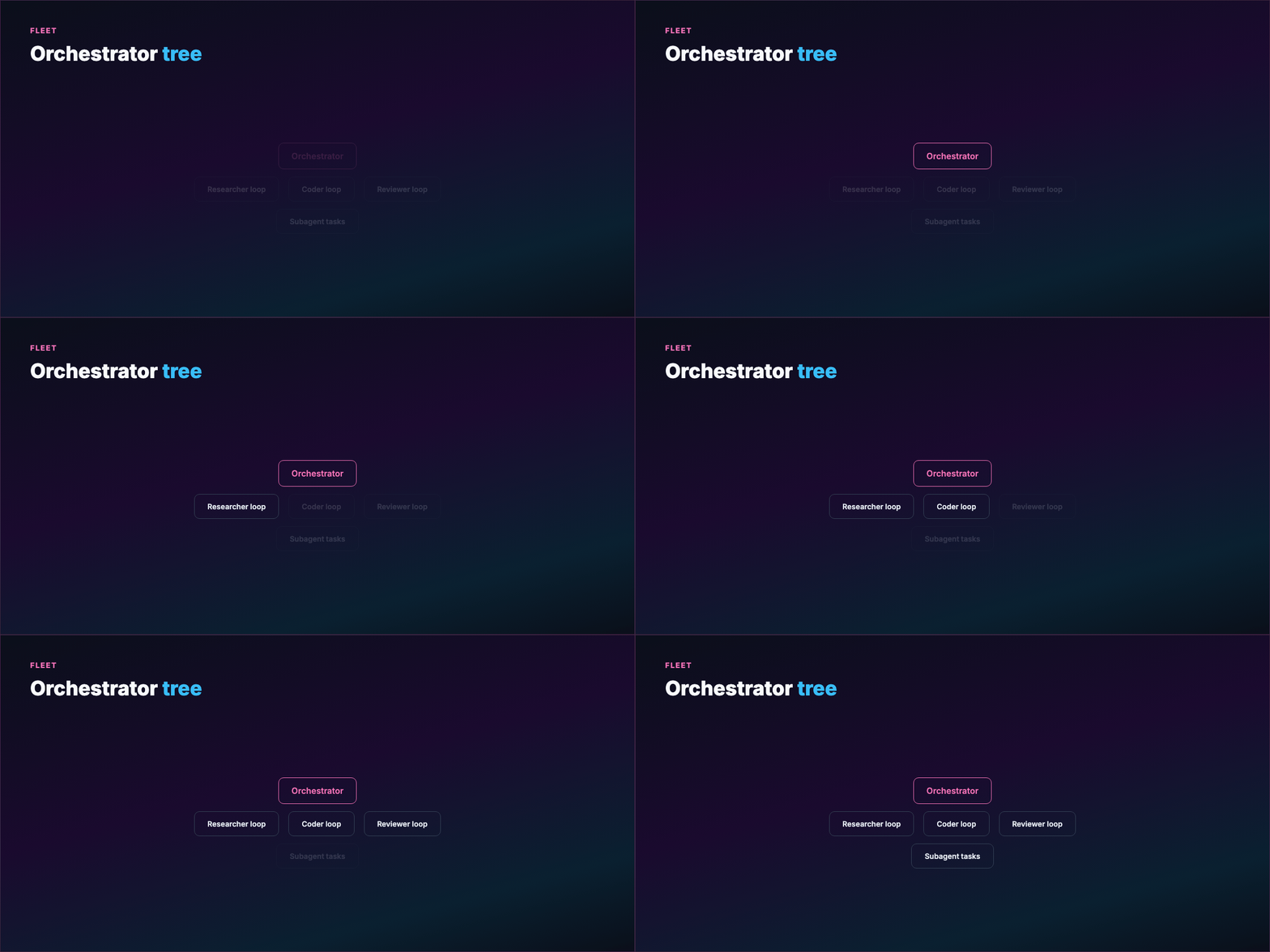
Cross-link: Hermes masterclass (ReAct + 90-turn cap) · OpenClaw (gateway + multi-agent sessions).
Part 5 — Open loops vs closed loops
Open looping — wide operational space, vague path, room to explore. Can discover solutions you didn't spec. On a research budget, exciting.
Costs: reasoning chains that go nowhere, context bloat, compounding API bills. Loose requirements → slop at scale — output that looks finished but misses the bar.
Closed looping — human architect defines path before execution: clear goal, defined steps, eval gate per step, explicit stop. Agents still loop — inside your frame.
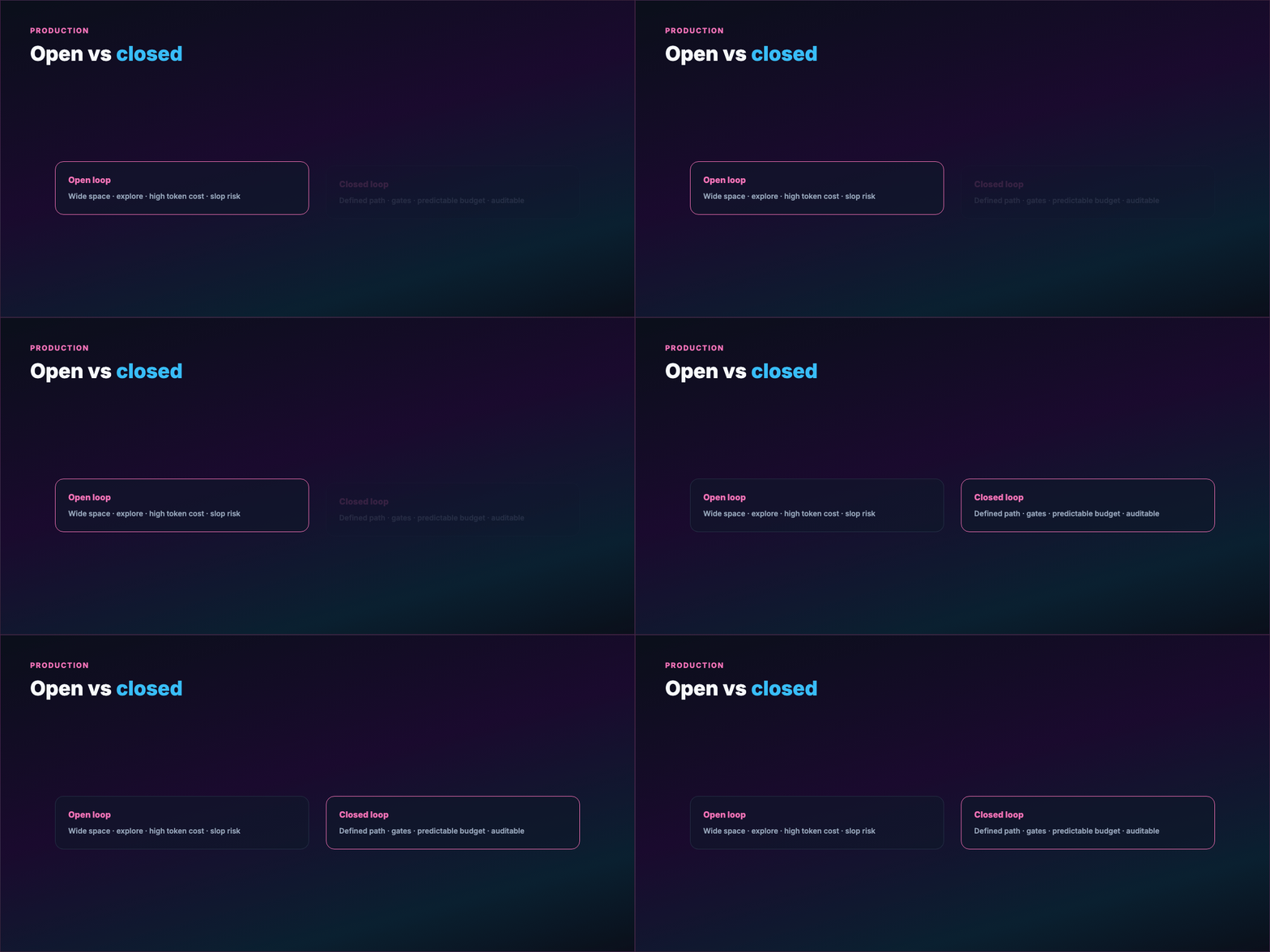
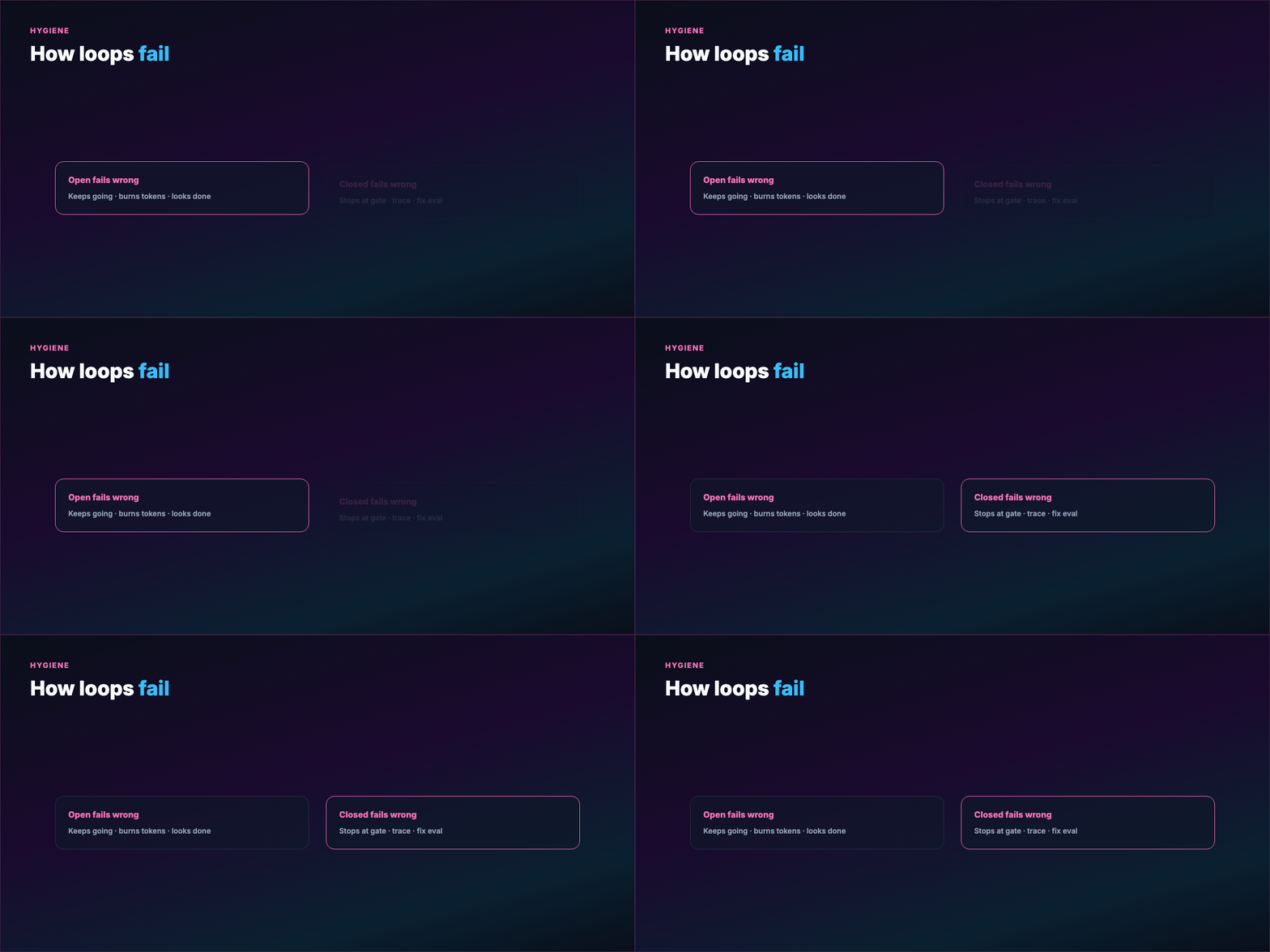
Failure contrast:
- Open loop fails → keeps going, burns tokens, plausible wrong output
- Closed loop fails → stops at gate, trace shows where, fix eval and rerun
Production default: closed first. Expand operational space once the gated loop works.
Part 6 — Five parts of a well-engineered loop
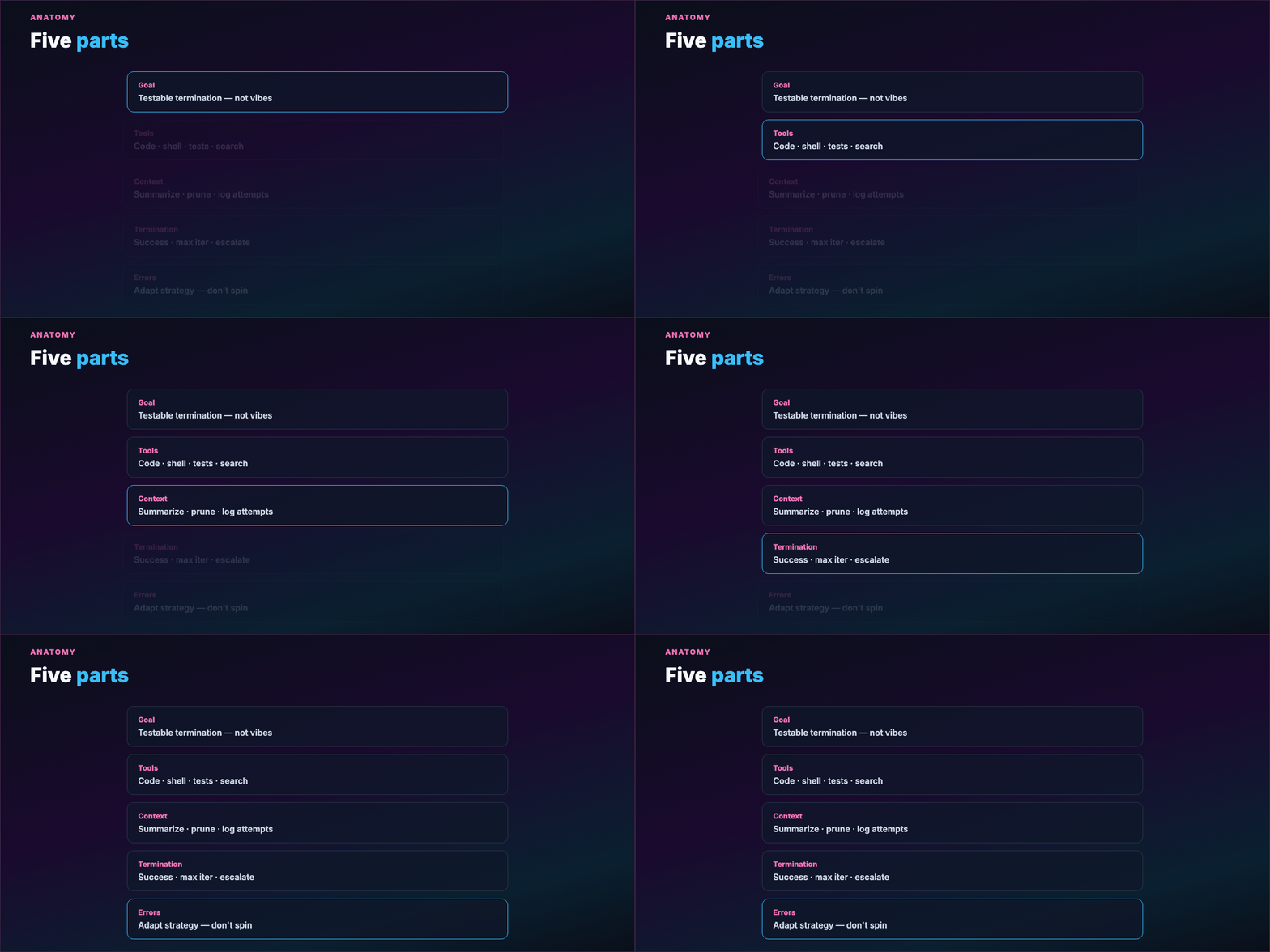
1. Clear goal — Specific enough to evaluate. "All unit tests pass" not "make the app better."
2. Tool set — Loop quality = ability to touch reality: run code, read/write files, shell, tests, search docs. No tools → guessing loop.
3. Context management — Each iteration adds tokens. Summarize history, log attempts, prune noise before the next turn.
4. Termination logic — Success conditions, failure exits (max iters, repeated same error), escalation paths.
5. Error handling — Recoverable vs hard blockers; change strategy after repeated failure — not identical retries.
Part 7 — Common loop patterns
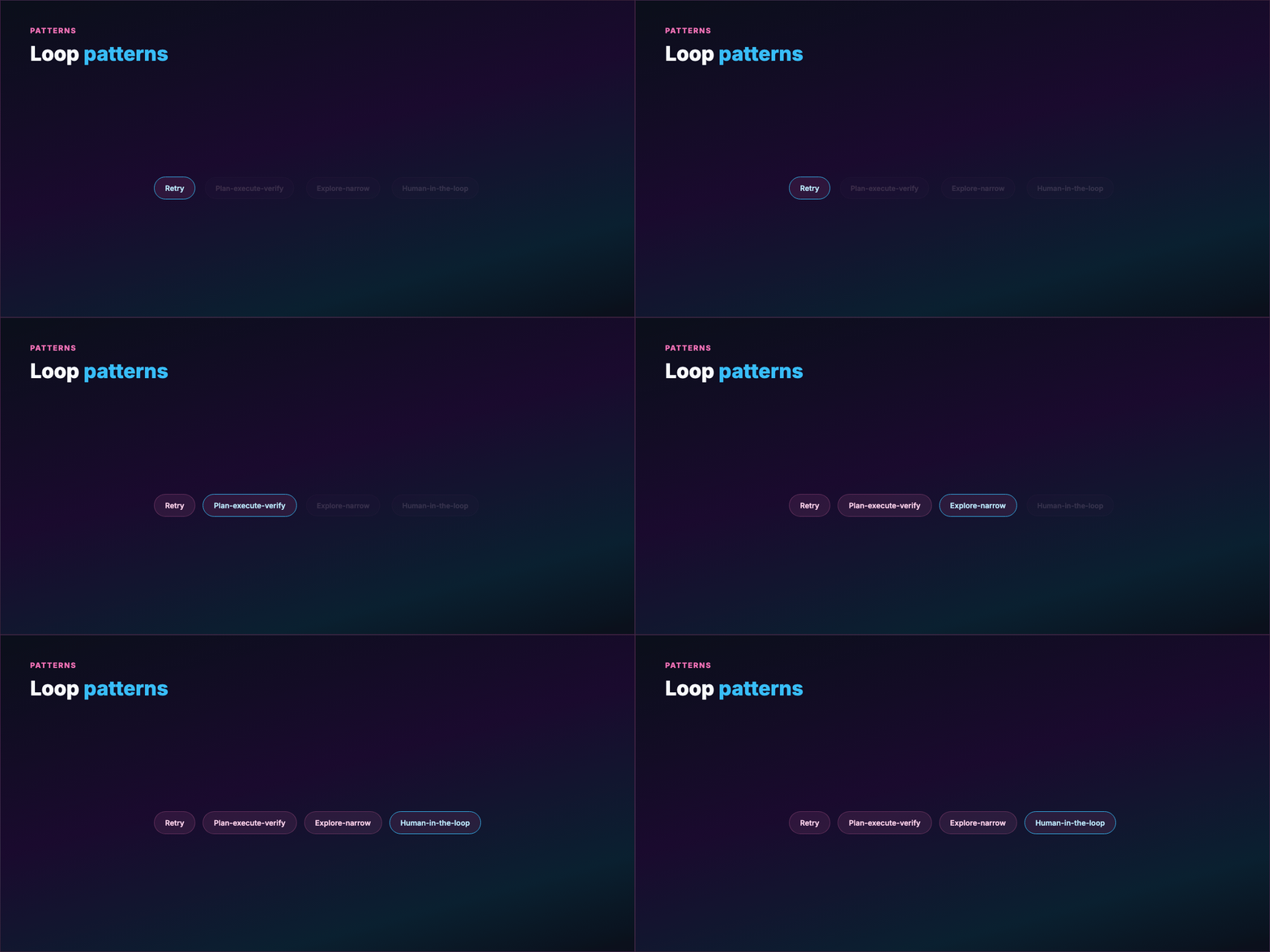
Retry loop — Try → check pass/fail → retry. Best for atomic tasks with clear criteria (one function + one test).
Plan-execute-verify — Plan steps, execute one, verify before next. Refactors, multi-file features. Must revise plan when step 2 invalidates step 5.
Explore-narrow — Try multiple approaches, score intermediates, commit to best path. Debugging unknown errors. Watch context explosion — prune early.
Human-in-the-loop — Pause on ambiguity or high-risk action; resume after approval. Production deploys, irreversible ops. Too many interrupts → you're the loop again.
Part 8 — Frameworks and what they solve
Building loops from scratch is tedious. Frameworks differ in state, failure recovery, and debugging — not just syntax.
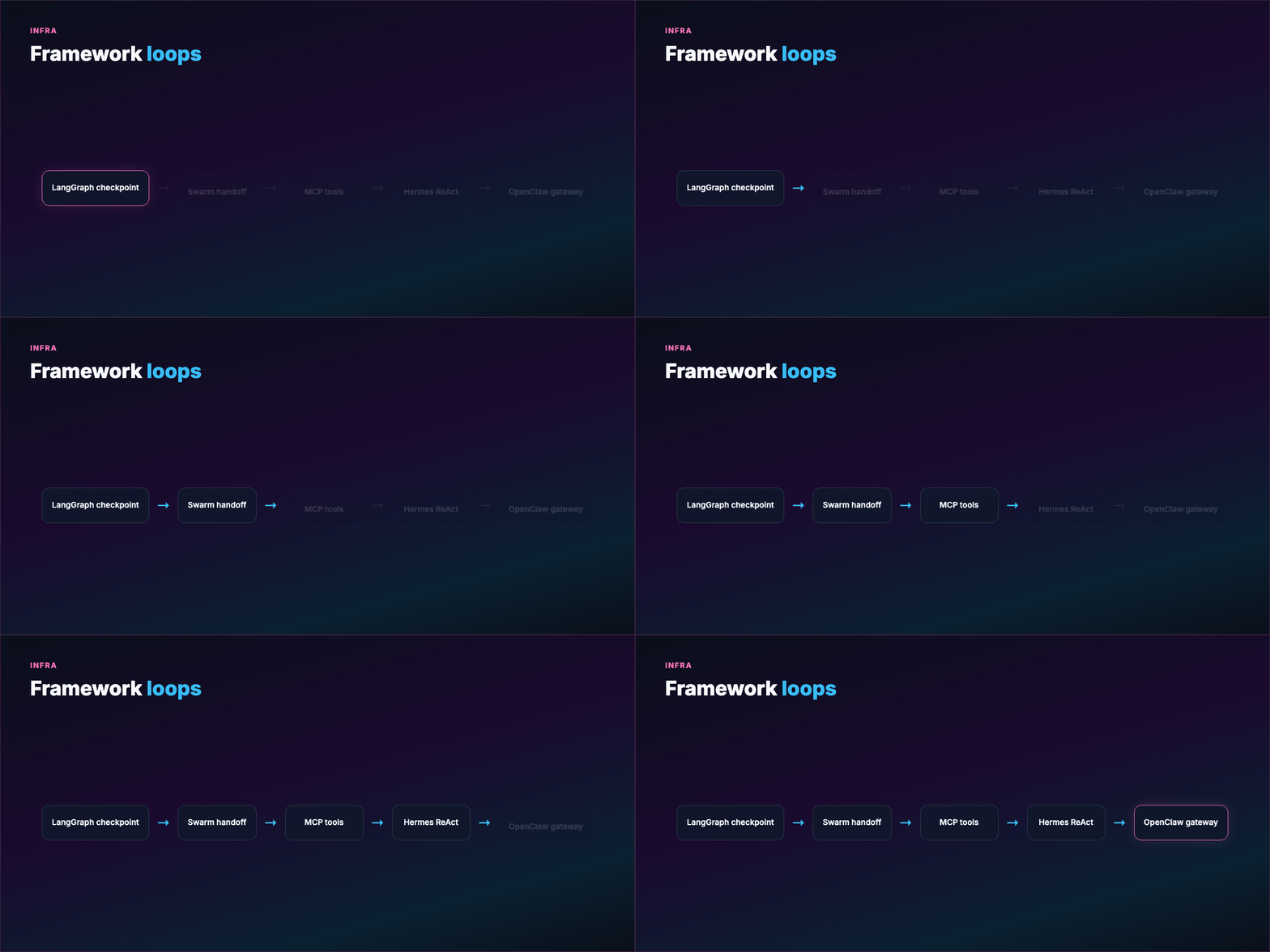
LangGraph — Loop as stateful graph; checkpoint after each node; resume mid-crash without losing context. Long-running fleets.
OpenAI Swarm — Stateless handoffs; full context passed explicitly each hop. Clean debugging, assembly-line workflows.
Microsoft Agent Framework — Async message passing; parallel branches; separate harness vs production loops with human review gates.
Anthropic / MCP — Standard tool discovery; orchestrator attaches capabilities without per-integration glue; interrupt before dangerous ops.
Hermes Agent — Synchronous ReAct core, skill learning, gateway + cron for proactive loops. See masterclass.
OpenClaw — Channel-first gateway, isolated agent sessions, skills + heartbeat. See masterclass.
Pick by failure modes your team can tolerate, not benchmark hype.
Part 9 — Context and token hygiene
Each iteration appends: patches, stack traces, decisions. Unbounded history → token limits and forgotten early attempts.
Practices:
- Structured feedback — relevant code snippet + intent + "same error as iter 3?" flag
- Rolling summary — "Fix A failed (TypeError), Fix B partial, tests fail line 47"
- Tool call budgets — max calls per iteration; budget exhaustion = failure signal
- Summarize every N iterations — compress log, keep last K errors
Part 10 — Hands-on: minimal closed loop
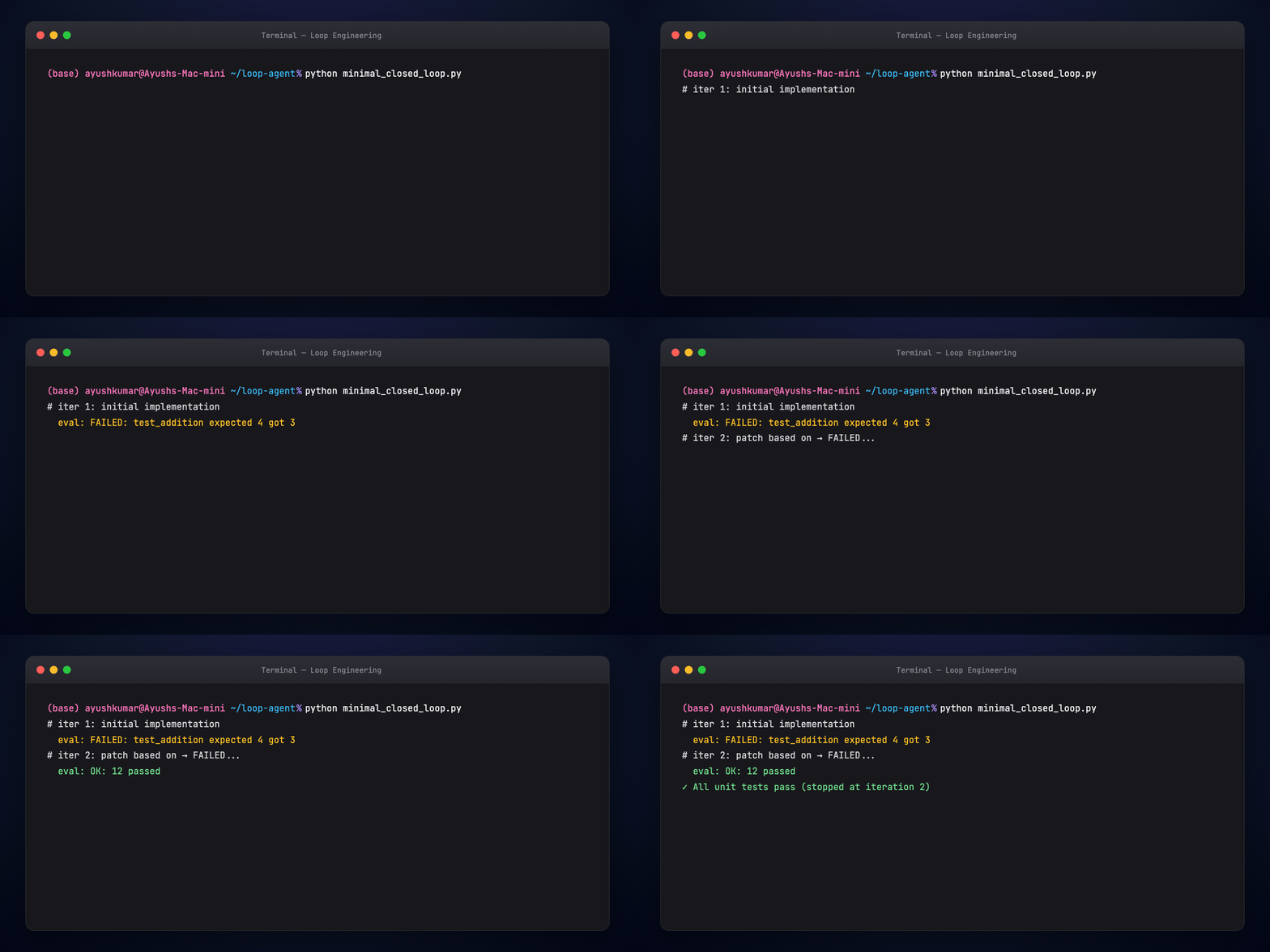
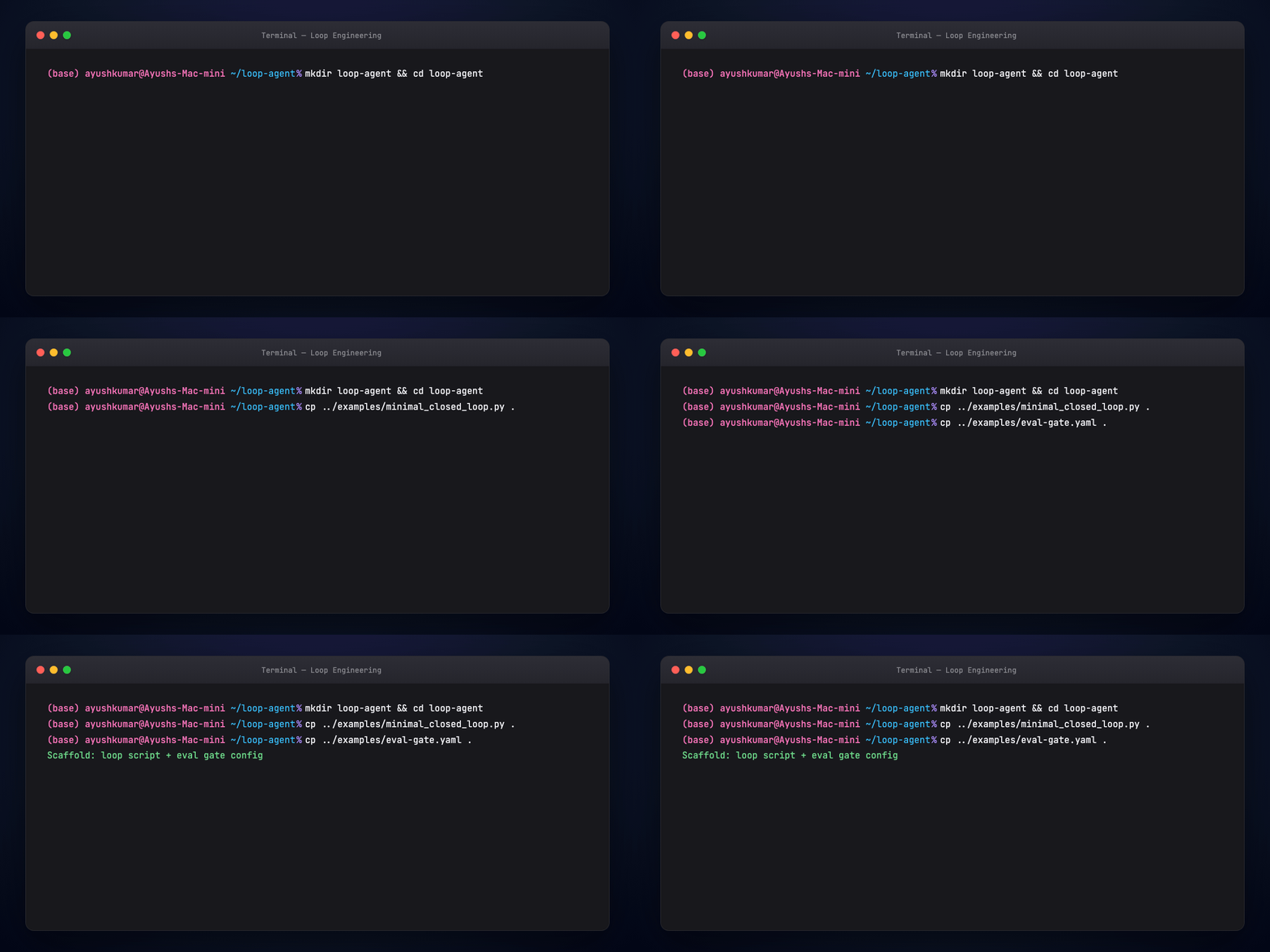
The script loops: propose patch → run eval → exit on success or escalate after MAX_ITER.
Wire real run_tests() to pytest; replace agent_step() with your LLM + tool calls.
Part 11 — Hands-on: eval gate config
Copy eval-gate.yaml into your harness:
- success — measurable metrics (exit codes, counts)
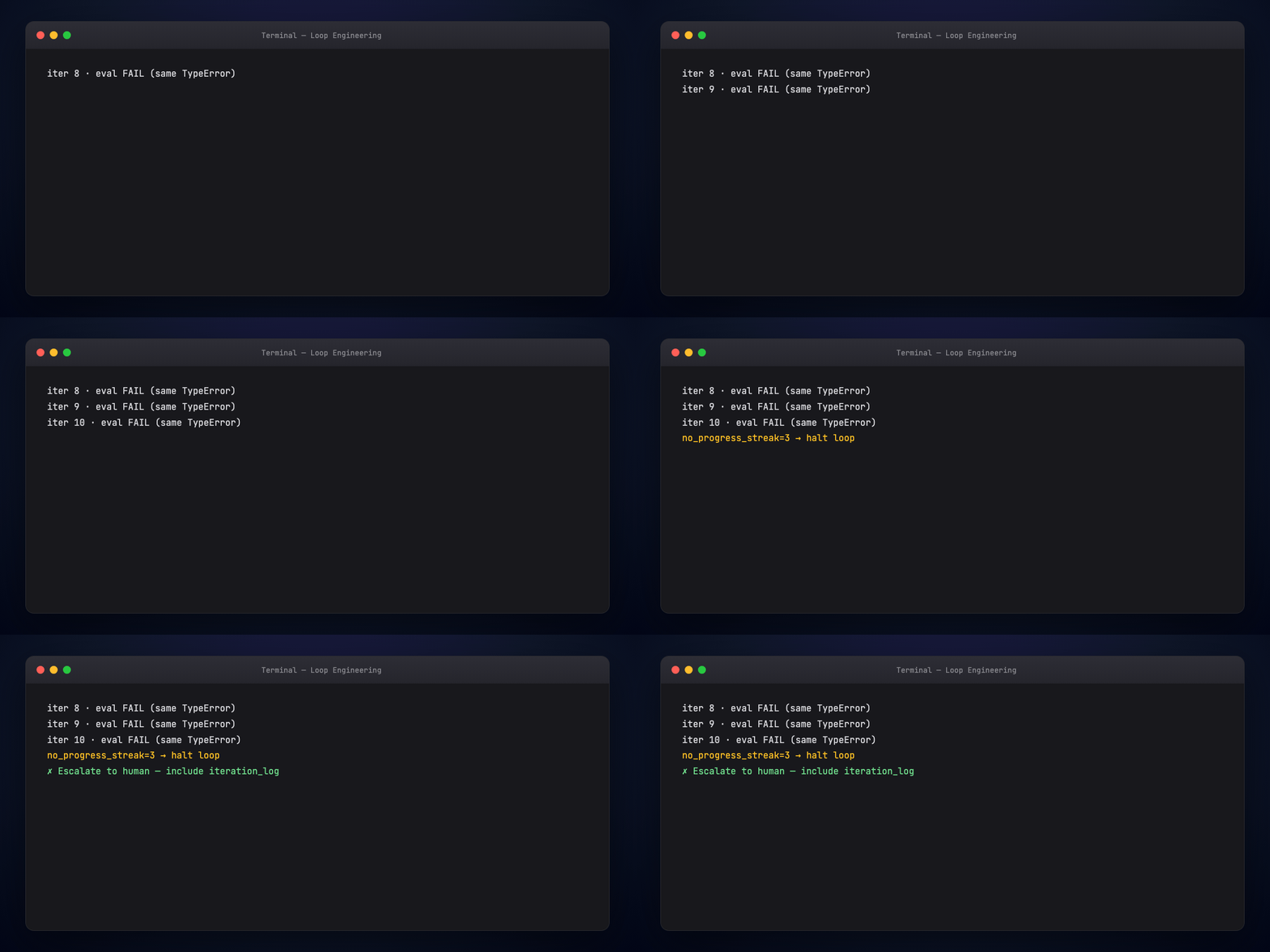
- failure — max iterations + no-progress streak
- escalation — human review payload
- context — summarize cadence
Part 12 — Multi-agent loop sketch
Orchestrator pseudoflow:
goal → decompose → for each subtask:
         assign specialist → specialist loops until sub-eval passes
       → integrator merges → global eval → done or rework branch
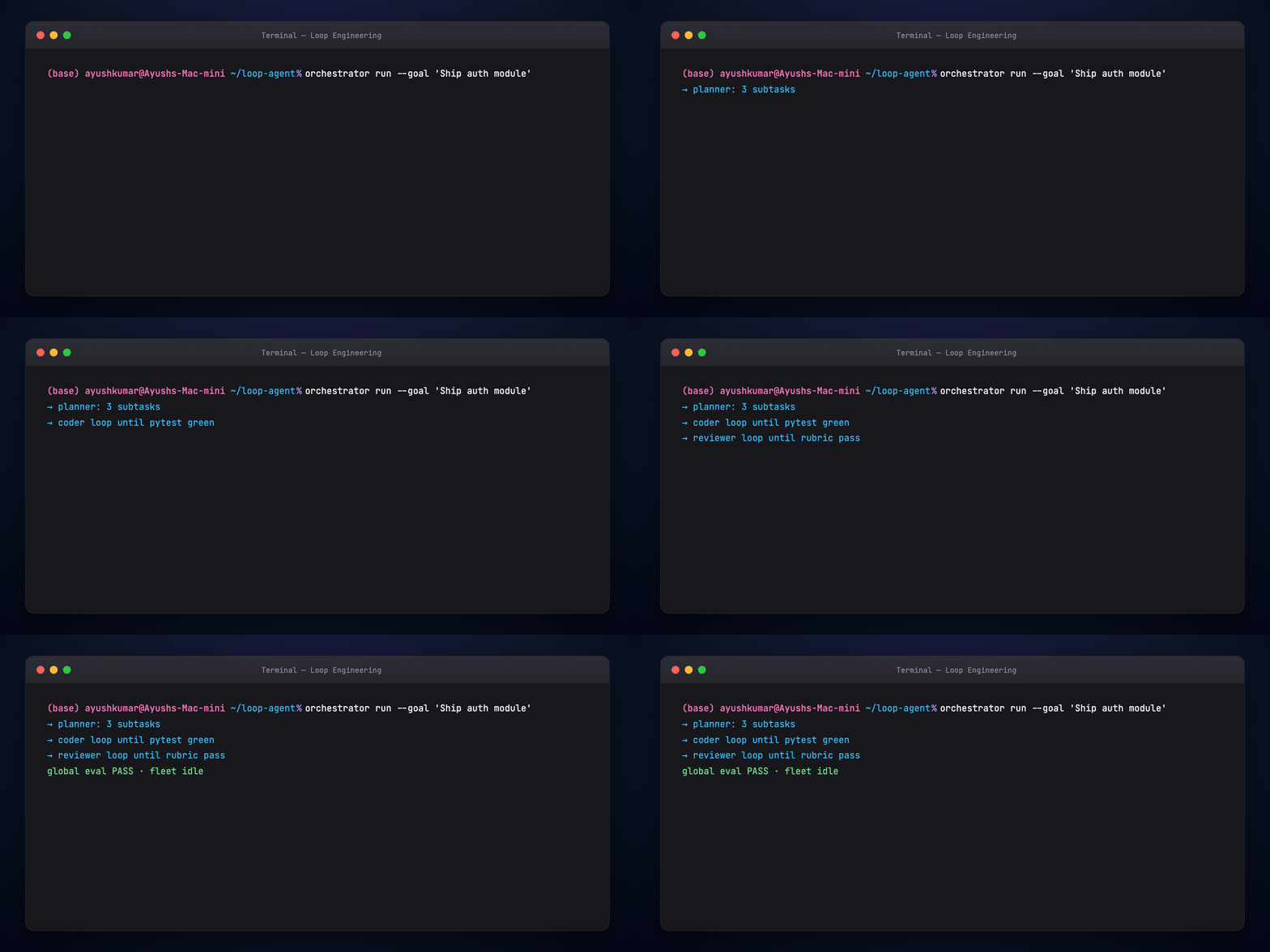
Start single closed loop first. Add fleet when you hit context ceiling or role confusion.
Part 13 — Where to start
Build a loop when:
- Same work type repeats and quality should compound
- Success is verifiable, not vibes
- You spend time driving steps the agent could navigate
Don't loop everything — one-shot summarization doesn't need ten iterations.
Starter recipe:
- Write termination condition on paper
- Wire one eval gate (tests or schema validator)
- Single agent, max 8–10 iterations
- Log every iter; summarize history
- Test failure cases before happy path
Part 14 — Failure modes checklist
- No exit condition — runs forever or stops randomly
- Same error, same fix — spinning, not learning
- Context overflow — model forgets task
- Vague goal — can't detect done
- No tools — pure hallucination loop
- Open loop + loose spec — expensive slop
Test deliberately: ambiguous goals, broken tools, unsolvable tasks (verify exit works).
Part 15 — Loop engineering vs agentic AI
Agentic AI — autonomous action toward goals (broad).
Loop engineering — discipline of structuring those actions in feedback cycles with explicit gates.
Most agentic systems are loops under the hood. Quality differences usually come from loop design, not base model alone.
Regenerate visuals
All diagram and terminal GIFs render at 1200×600 px (Medium/blog hero size).
cd guides/loop-engineering/assets
python3 render_mega_gif.py
python3 render_diagrams.py all
python3 render_terminal_gifs.py all
python3 render_blog_poster.py
cd ../../..
./scripts/prepare-docs.sh
Further reading
Summary
Loop engineering moves you from expensive autocomplete to goal-driven automation. Define pass/fail gates and stop rules; let agents run the revision cycle. Start closed, single-agent; add fleet and openness when evals prove the frame. The model got better — your workflow should too.